Tag Archives: advice

Teaching our children about consent should start in early childhood

The topic of consent is everywhere at the moment, it is an important social issue that affects each and every person, male or female, no matter their age. While I welcome mandatory consent classes on college campuses, I can’t help but wonder whether we are leaving it too late to begin introducing the topic of consent to the young people of Ireland? Let’s face it; the majority of first year college students are already sexually active. Should these mandatory classes be apart of the secondary curriculum? Absolutely. But as parents I feel it is our responsibility to plant the seed much earlier on in life.

I recently watched Louise O’Neill’s documentary Asking for It? If you haven’t seen it yet, you can watch it here. After it’s airing, I began scrolling through comment sections on social media to suss out what the Irish public thought of rape culture and the issue of consent.

Sadly, I was unsurprised to see so many people claim that Ireland does not have a rape culture. People were either too fixated on the word “culture” or almost literally sticking their fingers in their ears and screaming to avoid dealing with this very real issue. It’s such an Irish thing to do, to sweep it under the carpet, no need to make anyone uncomfortable. We have a rich history of turning our backs on painful subjects. Just look at the Magdalene Laundry scandal, for instance. Modern day Ireland is repulsed with how women up until very recently were treated by the Church. We are also disgusted that as a society we kept quiet. This attitude reflects what we are seeing today with women being perceived within a Madonna-whore complex. No, “rape culture” does not mean that as a nation we condone rape. Not. At. All. Of course the vast majority of people believe that rape is a heinous crime and those who carry out such acts should be punished to the fullest extent. Consent is consent and using excuses means we will never tackle the real issue head on.

We have a tendency to victim blame, not just about rape but also in many other situations. Just look at Kim Kardashian’s ordeal in Paris, for example. The narrative wasn’t about this traumatic event a human being went through but rather, blaming Kim for showing off her very expensive jewellery on social media. That she was “asking for it to happen.” The same thing happens to victims of sexual assault.

“Well if she’s going out dressed like that…”

“She shouldn’t have walked home alone”.

“How much did she have to drink?”

“Sure wasn’t she mauling the face off him earlier on in the night? What did she expect?”

Excusing a man’s (or woman’s) actions because they were drunk and saying “he/she would never do that normally.”

Every time these words are uttered we undermine the actual issue.

Growing up in Ireland, I could not go with friends for a night out without the following lecture chanted at me like some sort of protection spell:

“Stay with the crowd, don’t wonder off alone. Watch your drink. If someone is buying you a drink, go to the bar with them.”

As a young teenage girl, I had never been exposed to rape. It was something I only knew about from obsessively watching Law and Order: SVU. It was something that happened in far away lands, not here in little ole Ireland. Then again, I did live a fairly sheltered life.

But, as I began going out more, I started to understand why my mother gave me the same speech over and over again, each and every single night out. Even today at 29, a mother of two children, I am still reminded by my mother to do all of those things. Years ago I would have rolled my eyes at mum followed by a “yeah, yeah, yeah. OK, Mum.” Now?  I make sure I don’t walk home alone on the rare night I do go out. Or if I can’t get someone to walk home with me, I call my husband for the 7-minute walk home. A lot can happen in 7 minutes.

I recently had a discussion with an older relative about rape culture and particularly, victim blaming. The conversation went something like this:

“Women have a level of responsibility to protect themselves,” the relative said.

In a perfect world, it would be great for women to feel comfortable enough to walk home alone at night. It has been drilled into our heads so much that we shouldn’t put ourselves in dangerous situations but how about we start telling young men before they go out to respect any girl they potentially hook up with. That no means no and not try a little harder to swoon her into submission.

Sexual abuse is rarely ever about sex, it’s about power. Assault can happen anytime, anywhere and the attacker more often than not is someone familiar to the victim. 93% of perpetrators are familiar to their victims.

I responded to this relative with a question.

“If a man is mugged in the street at night. Do you blame the man or the thugs that mugged him?”

This made my relative stop and think.

A few days later we went to the woods for a stroll and some foraging. We separated for a few minutes. I noticed a white van with no windows pull up near me. I looked around to see how many people were around me and checked the laces on my runners were tied properly. My male relative didn’t acknowledge the van, as in he didn’t think twice about it. Women all over the world are on edge. We always have our defenses up. Will that guy cat calling follow me home? Will I arrive home safely in this taxi?

When scrolling through the comments section under Jennifer Hough’s article about rape culture in Cork one comment stuck out for me.

It went something like this:

There have been no reports of rape over the weekend so I question the author’s claim that she saw this happening.

One in four Irish women have experienced sexual abuse at some point in their lives. One. In. Four. That’s almost as common as cancer and yet, why don’t we see it in the media more? Victims of assault fear the trauma of reliving their experience during an investigation or fear of being accused of leading the perpetrator on; that they did something to ask for the attack. According to the Rape Crisis Centre Network of Ireland’s (RCC) 2014 statistics 33% of survivors contacted the police about their assault. According to the Sexual Abuse and Violence in Ireland Report (SAVI), only one in ten sexual crimes are reported in Ireland. Of that one in ten, only 7% secures a conviction. Less than 1% of victims of sexual crime in Ireland get justice.

So, just because we don’t see it in the media everyday, it doesn’t it’s not happening.

Consent is a hot topic and Louise O’Neill’s documentary resulted in the subject being discussed everywhere-amongst friends, on social media and in the news. The end message is we need to teach young men about consent just as we teach women to protect themselves. We are now seeing mandatory classes in collages being taught about consent but should we wait until most young people are already sexually active before we introduce the idea of consent to them?

Just the other day my 7-year-old son was trying to get his 19-month-old sister to give him hugs and kisses. She was shouting no but my son kept trying. At that age of course there was no malice in his actions but something clicked. This is where it begins. I told my son there and then that if his sister didn’t want hugs and kisses and she is shouting no that it meant no and to stop. I want him to understand that now, not when he’s a teenage boy. No means no. We see it all the time, relatives practically forcing children to show them affection. Why are we so pushy for physical affection? Children are not property. We have no right to hit them so why should we force them to hug and kiss us? It is their body. It is their choice. Their feelings about their personal space matter as much as any adult’s.

It all starts in childhood. We need to teach our children that our bodies are our own and nobody, not our parents or siblings have a right to invade our personal space or have forced affection brought on them. Parents often tell their children to let them know if anyone touches them inappropriately. Abuse often starts with uninvited touching, hugging or stroking. If we force affection on a child who clearly doesn’t want it, it can be confusing for them to know when something is inappropriate. Forced affection doesn’t show children we love them, it shows them that we can do as we please with their bodies.

If you don’t believe the idea of consent should be introduced to children just take a look at the figures from the 2014 RCC report:

52% of survivors aged 13 to 17 were subjected to rape

15% of perpetrators were under 18

9% of survivors attending crisis centres in Ireland were children.

Waiting until our children become young adults to discuss consent is too late and the figures reflect this.

Although parents or relatives have no intention of harming a child, nor do they think they are doing anything inappropriate; we are teaching our children that an adult or other person’s want for physical affection is more important than their own comfort and safety. It starts as early as toddlerhood; we are laying the groundwork for behaviours that continue into adult life. Teaching our children that no means no could potentially save them from assault later in life. It could also empower young people to have sex only when they’re ready to.

We don’t see physical interaction amongst children as a problem until it’s too late. They tickle, they force hugs and rarely they mean any harm. But every parent has experienced an occasion where their child has either been subjected to touching they didn’t want or have been the ones to force the affection or tickles. So how can we introduce consent to children without going into too much detail about sexual abuse?

We need to teach our children to ask for permission to touch another person. “Is it okay if I hug you? Or “Can I have a hug?”

This teaches our children to ask for permission and it also teaches them to think about their actions before they do them.

We need to teach our children that consent can be taken away too.

Adults know all too well, especially parents that we have days where we feel “touched out.” Kids have those days too. They may have been very affectionate and willing to accept affection the day before but they are well in their rights to tell someone that they don’t want to be touched today. This maybe confusing for other children so it is vital that we show them that it’s OK to change your mind.

A child should never be forced to show affection to another person.

It is a common occurrence that children are told, “go give Nana a hug” or “give Aunty a kiss”. Children are eager to please so they may oblige but that shouldn’t be the case. No matter how familiar your child is with someone, he/she should feel comfortable enough to say no. Given that 93% of cases involve a person the victim is familiar with, it is important that we validate our children’s feelings and respect their decision. Under no circumstances should you guilt a child into giving you affection. Don’t pretend to cry or be sad. So many of us are guilty of this. I know my husband and I have been guilty of this. Humans need touch, we are social creatures but it isn’t really affection if you force or guilt a child into it is it?

Not saying no doesn’t mean yes.

As discussed, children are eager to please so they may do something they don’t really want to do to please a friend, teacher or family member. You may think your own child has no problem saying no but they may not be so forthcoming with someone other than you. Our children must also learn just because they don’t hear a resounding no that it means they can go ahead with that hug or kiss.

Practice what you preach.

Lead by example. Children imitate what they see in their day-to-day lives. If they see Daddy (or Mommy) force affection on to one another, the idea that it’s OK to do that is solidified. Many couples will force a hug or a kiss a form of tomfoolery and no there is no ill intent but still, it is important for us to show our children that we should respect everyone’s boundaries.

Further reading and helplines:

Click to access RCNI-National-Stats-2014.pdf

Rape Crisis Centre helpline:

1800 778888

or see the website www.rapecrisishelp.ie.

Until next time,

Z.M.
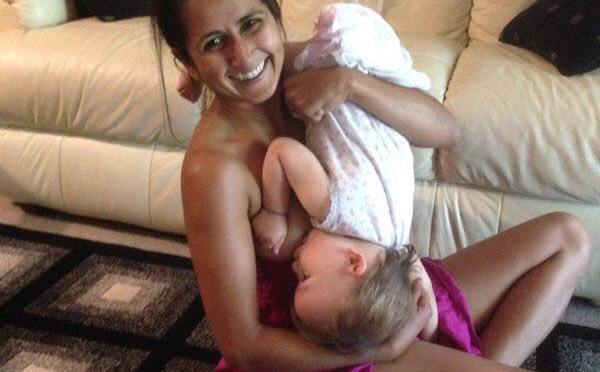
 

You know you’re breastfeeding a toddler when..

It’s National Breastfeeding Week! I love this time of year because my Facebook timeline is filled with beautiful pictures of children having milky cuddles with their mummies. Of course this week also means there will be heated debates under articles, such as this one. This week is not about debate though, it’s about celebrating and promoting breastfeeding. And boy, do we need to promote the sugar out of breastfeeding. In Ireland just 1-2% of one year olds are breastfed. The low breastfeeding rates is costing our Government approximately 800 million Euro each year. The HSE and World Health Organisation recommends all infants are exclusively breastfed and then fed along with solids until at least two years old.

Breastfeeding a toddler is so much fun! Nursing can be challenging at times but things change once your little baby becomes a toddler, breastmilk is no longer just about nutrition but immunity, comfort and so, so much more. Scientific studies show that the natural weaning age is anywhere from 4-7 years of age. The average weaning age world wide is 4 years old.

You know you’re breastfeeding a toddler when..

1. Your child finds new and interesting positions to nurse in. 

Before now, you had your go to position, whether it was laid back or a rugby hold, you had that position down. Long gone are the days when you felt so awkward, perfecting the latch and then meeting your baby’s eyes with a loving gaze.

Now? Feet in your face, feet in your mouth, feet in their mouth. Nursing has become a yoga extravaganza. You wonder to yourself “HOW THE HELL CAN YOU BEND LIKE THAT?!” In breastfeeding circles we call this act ‘Gymnurstics’. If only it was an Olympic sport.

gymnurstics

2. Your child thanks you.

Especially when you don’t ever expect them to. The fact that they know it’s something they love and appreciate, innately astounds you.

3. You feel less like a mum and more like a buffet table.

With child hopping from “dis side” to “dis side” every ten seconds, you start to wonder if your boobs provide different flavours! Chocolate and vanilla perhaps?

giphy4

4.You’re nursing two toddlers and

They argue about who is getting which boob and agree on a compromise.

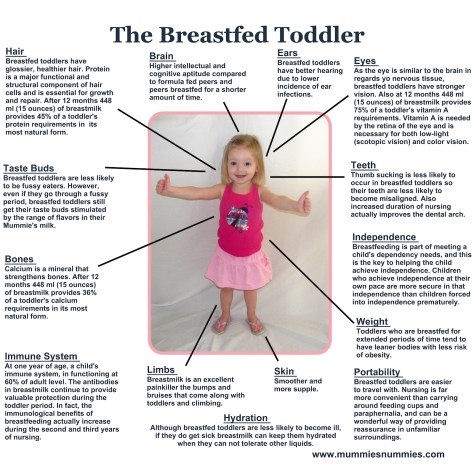
5. You post this infographic every time someone says there are no benefits to breastmilk after 12 months:

foto friday-012

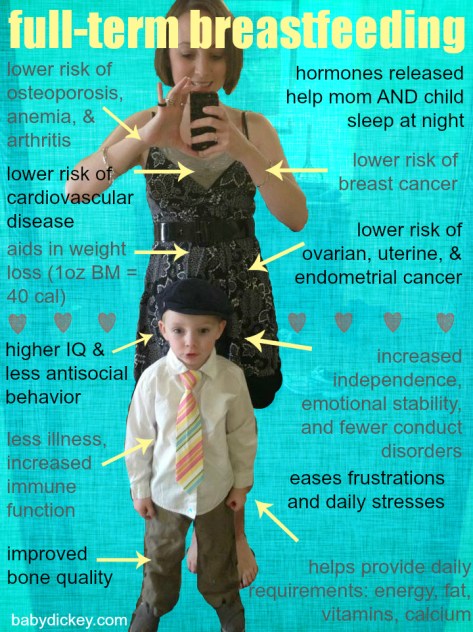
or this one

infographic-bfing-toddler

It’s actually crazy how many health care professionals tell mothers that nursing passed 12 months is only for them and there are no benefits to the child. As you can tell from the graphics above, there is an abundance of benefits in full term nursing. There is also amazing benefits for mom too. Check it them out below:

f9491061aad63941ae2a5a0a0a2cf122

6. Your toddler has their own word for your milk.

My little girl asks for “boob” at 17 months but I have heard the cutest ways toddlers ask for milk like “bainne”, “mama milk” and”milkies”, to name just a few.

7. Nipple twiddling becomes a game.

No matter how many people think it’s “weird”, “gross” or “wrong”, there is a biological purpose for nipple twiddling. Children twiddle nipples or slap mother’s breasts to stimulate the let down of the milk. However, many toddlers turn this into a game by seeing just how far mommy’s nipples can stretch out. It’s hilarious until you realise you haven’t trimmed their nails in awhile or you get sprayed in the face with your own milk. Hey, at least you’ll have some awesome skin!

giphy

8. You’re so amused when people find out you’re still nursing and they recoil in horror.

It’s very amusing to hear people criticise “extended” breastfeeding, especially when their own toddlers are sitting across the way from you with a dummy or bottle in their mouths. We are the only mammals that don’t let their young self wean and we are the only mammals that drink the milk of other species. It’s ironic really that mothers of breastfeeding toddlers are criticised yet full grown adults drink the growth fluid of calfs. Many people are under the impression that breastfed toddlers and older children are only being fed breastmilk. While yes, it is an amazing source of nutrition, children over a year do need to have a healthy diet of solid food in addition to their mummy’s milk. A lot of people also believe (without any basis for their thoughts) that breastfed toddlers will be “clingy” and will have psychological problems when they’re older. This is not the case at all. Studies show that breastfed children are protected against mental health problems and addictions.They tend to be higher in intelligence and more emotionally secure than children who were not breastfed.

Following on from that

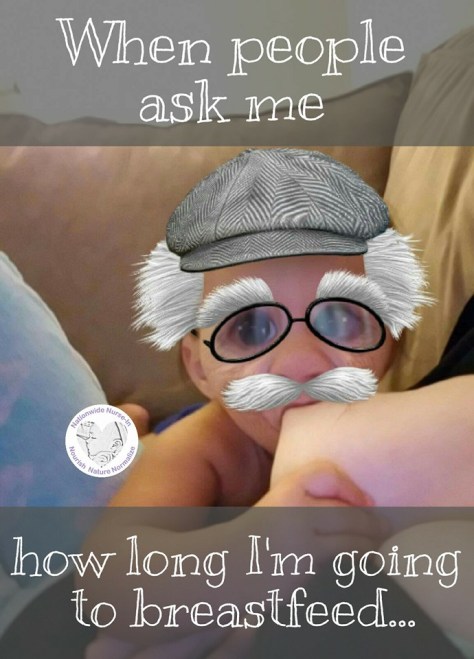
9. When you’re asked how long you’re going to continue to nurse for.

When somebody is being rude asking me that question, I’ll usually answer with something sarcastic like “We will probably wrap it up when she starts college.” For anyone who is genuinely asking I tell them that we will stop when we are both ready. It’s a two way relationship. Feeding a toddler makes life so much easier. I’m not sure how we would deal with tantrums and illness without breastfeeding. It really is the answer to so many problems.

14391009_1769778793294070_8021807045819374532_n

10. When they learn how to unclip your bra and help themselves.

This aspect of feeding a toddler is simply brilliant, especially at night. If you’re cosleeping and breastfeeding your child will eventually learn how to get your top open/up and latch on while you’re still sleeping. Studies show that mothers who breastfeed and co sleep get more sleep than mothers who don’t. Who doesn’t love extra sleep?

11. Your toddler feeds their dolls/teddies/toy trains and even cats.

There is nothing sweeter than seeing your toddler pretending to be mommy and lifting their top to nourish their baby dolls. It’s amazing to see natural instincts kick in when their babies are “crying”. My own daughter recently chased the cat around the house with her top up screaming “nummy nummy num”.

If your toddler isn’t feeding their toy, they’re getting you to feed them. Lying down with your toddler latched on one boob and some inanimate object resting on the other.

12. Your toddler learns that other people have nipples too.

Recently my daughter realised Daddy had nipples too. She stared at them for a few minutes. Daddy and I waited to see what would happen. Of course I was trying to convince her that Daddy has milk too while he was trying to tell her he didn’t. After a couple of minutes, she opened her mouth (very reluctantly) and went for a taste. She was immediately put off my the hair that surrounds Daddy’s nipples.

bpg02k

and finally

13. Your toddler and your husband have a lot in common.

The sight of bare boobies makes your toddler giggle, squeal and clap. Motor boating is also a favourite past time.

A final word..

Feeding a toddler brings so much joy but quite often comments made on social media or from friends and family can be really off putting. Women are called pedophiles and weirdos just for simply following their biological instincts and doing what is best for them and their child. It’s a sad reality that breasts are used to sell everything from cars to food but should a woman use them for their biological purpose, they are abused. Breastfeeding is in no way sexual and anyone who thinks so should take a class in Biology. Would you scoff at a dog feeding her 8 week old puppies? In human years, that would equal to a toddler. Even cows, when left alone will feed from their mothers for up to four years. We don’t respect our mammalian instincts anymore.

We rarely see full term breastfeeding in our everyday lives. Where we see it most is in films or TV shows and the characters are usually portrayed as really radical hippies or weirdos. Take Game of Thrones, for example.  The feeding of a 10 year old is pretty unrealistic. Children loose the ability to correctly latch at around aged 7. Ever wondered why they are called milk teeth? When a child looses their milk teeth, this is right about the age where they would naturally wean. Hence the natural weaning age is between 4 and 7. Portraying full term breastfeeding in a negative way does nothing but hinder the acceptance or normalisation of the act.

It is really only in the West that we have such a problem with breastfeeding.

“In Mongolia, there’s an oft-quoted saying that the best wrestlers are breastfed for at least six years – a serious endorsement in a country where wrestling is the national sport.”Read more about this here.

There is no reason you need to stop feeding your baby once they hit 12 months, unless you want to. If it feels right for you and your baby, go for it and feck the begrudgers.

giphy1

Household Gadgets for Spoonies-Part 1

What’s a “spoonie”? A spoonie is a person who suffers from a Chronic Illness. It is derived from Spoon Theory. When you are ill every. single. day, you need to decide what’s important. Do I shower or clean the bathroom? Although it might be a no brainer that you obviously choose the shower, for many of us, we have to forgo the shower otherwise the house will look something like this:

hoarder-barbie-dreamhouse-4

Laundry-

When it comes to actually doing the laundry, it can actually be quite tough on the body with all the bending down to grab clothes out of the machine and reaching up to hang them on the washing line. To stop me bending down so much I bought a laundry basket with folding legs. I also bought a device that helps me fold clothes beautifully. I suffer from DCD like symptoms as does my son due to our EDS.

Top tip: Mountains of clothes stacked on chairs around the house? Everytime you do a load of laundry check the sizes, condition and try to remember the last time you wore it. Is it too big or too small? Put it in a bag to pass along to a friend or charity shop. Does it have holes in it? In all honesty, are you going to repair it? Bin it. Have you worn it in the last 6-12 months? If the answer is no, put it in the pass along pile. This will save you doing “the big clear out”.

Cleaning-

This is something everybody hates doing so can you imagine what it’s like for someone who may end up in bed for a week by doing simple cleaning tasks?

Hoovering and mopping the floors is a massive task for spoonies and can often lead to injury. Lugging around hoovers and buckets of water for the mop can often mean I dislocate or pull something. Hence why I don’t do the floors often! We did invest in a steam mop that can also be used to clean surfaces. I do the find the X5 to be a bit heavy so if anyone knows of a lighter model, let me know in the comments! What I particularly like about the steam mop is that you can clean without the use of chemicals.

https://www.youtube.com/watch?v=Mn0-bchY5aA

I haven’t bought one yet but I’m dying to get a cordless hoover from Dyson or a one of those rob hoover/mops. Other spoonies have recommended them to me. Come on, how awesome is this?!


5171AzV3P8L._SY355_

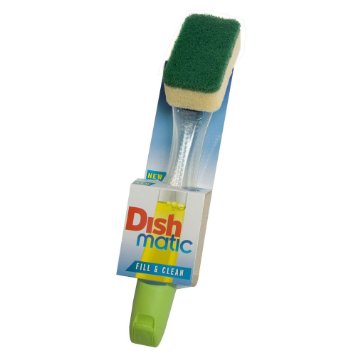
Top tip: Fill one of these guys with 1 part dish soap and 1 part white vinegar. Keep it in the shower and wash down surfaces before you get out of the shower or while you are conditioning your hair. Simples!

If your shower or bath has mould growing around the rubber edges you can soak some cotton pads in bleach and place it on the mouldy areas. Leave them there for a few hours and then wipe clean. The rubber areas will be white again!

Tidying up-

If you have kids and are chronically ill, keeping the house tidy can be a full time job. We live in a two storey house which makes things that bit more difficult. Recently, I bought two little blue baskets. When I am tidying up I go to each room and put things in the basket that don’t belong in that room. Then, as I go from room to room I put the things where they belong. If you have visitors coming around and you need to tidy quickly-just fill up the baskets and leave them to sort later.

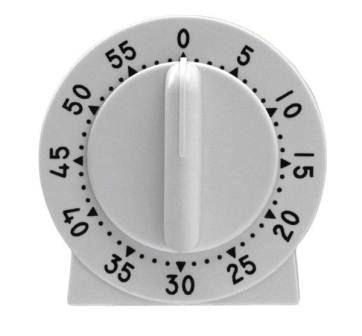
Top tip: This one is particularly handy for the little ones. Buy a timer. Each day set it for 5 or 10 minutes-whatever you can manage and for those few minutes do a little cleaning or tidying. It’s amazing what you can get done in such a small amount of time!

timer.jpg

Some other gadgets for cleaning and tidying:


Messy in the kitchen? Invest in some stove top protectors 

Dog hair everywhere? Dyson have an attachment you can use to hoover your pet

Slipper mops allow you to clean the floors while you walk to the fridge-or to bed.

A keyboard with storage is handy for extra wires, notes and pens.

I hope some of these tips have been helpful to you. Have any tips/gadgets you want to share? Hit me up in the comments and I’ll add them to Part 2.

Till next time,

Z.M

x


Common Breastfeeding Myths Debunked

There has been a lot of misinformation spread around lately in the press regarding breastfeeding. Unfortunately, celebrities have a lot of influence over society and those influences can be pretty detrimental to people’s health. Don’t believe me? Just look at the role former Playboy bunny, Jenny McCarthy had in the “anti vaxx” movement. This woman, with zero qualifications in anything, managed to convince millions of people that vaccines were responsible for autism. Even though Dr Wakefield, the man who was responsible for these falsified reports had his license revoked. There are still millions of people across the world that believe vaccines give children autism. Even though scientific studies are now showing that the condition is in fact, a consequence of genetics. So when celebrities such as Amanda Brunker spread false information like “watery breast milk”, what she is doing, whether she means to or not, is solidifying the doubt in some woman’s mind that she may not actually be “good enough.” Women are generally so hard on themselves and unsurprisingly really, with magazines and products telling them they are not enough, that they need to change themselves beyond recognition. We are a culture obsessed with having it all and being it all.

Celebrities have a huge responsibility when they speak in public. They should be informed on the subject matter they are talking about. Amanda’s recent column just goes to show women are not educated about breastfeeding at all. We all hear the “breast is best” mantra but what the majority of people don’t know is that breast is just the biological norm, it doesn’t have this long list of advantages, it’s just that formula has it’s disadvantages. We are barely educated about infant feeding, never mind feeding past infancy. It’s funny, if you want to get married you have to jump through so many hoops, like doing a pre marriage course but, when it comes to children we have a very “ah sure it’ll be grand” sort of attitude. In some respects, it is best to have a laid back attitude but, all choices regarding our children, especially when it comes to their health, should be evidence based and researched. And by researched I mean using official sites such as who.int, not some “truth” website.

If people did go and actually educate themselves about breastfeeding and breastfeeding past infancy, they would learn that in the second year of life 448mls of breast milk contains:

29% of energy requirements

43% of protein requirements

36% of calcium requirements

75% of vitamin A requirements

76% of folate requirements

94% of B12 requirements

60% of vitamin C requirements

Of course the longer a mother breastfeeds, the more protection she builds against illnesses such as breast and ovarian cancer. In fact, feeding for three years or more can reduce your chances of developing breast cancer by 94% That is huge! Yet society begrudges the women who do feed beyond the year mark-some even believe a child should be weaned earlier.

It was recently reported in the Irish Times that our low breastfeeding rate is costing the state €800 million a year. Nestlé recently announced they made a profit of nearly €80 million from Ireland alone in 2014. Formula is big business. Many I’m sure would be shocked to know that just €100,000 is spent promoting breastfeeding while maternity hospitals such as CUMH and UHL spend between €30,000 to €40,000 of tax payer’s money on formula every year, and that’s excluding the teats. So why do we have such poor breastfeeding rates?

If you ask me, and yes I know, nobody has, it’s because of misinformation. Pure and simple. So, with that in mind, I spoke with two experts about some of the most common myths surrounding breastfeeding.

Jack Newman, MD is a Canadian physician specialising in breastfeeding support and advocacy. He is also the co-author of ‘Dr Jack Newman’s Guide to Breast Feeding.’

Jack and baby

Based in Cork, Midwife and Breastfeeding Consultant Clare Boyle has been working in Ireland for the past 10 years. Clare teaches antenatal classes, breastfeeding preparation classes and provides breastfeeding support. See breastfeedingconsultant.ie for more information.

clare-new

Myth: Many women cannot physically breast feed or don’t produce enough breast milk.    

Dr Newman: This is not true.   There are a very few women who truly cannot produce all the milk the baby needs, but that doesn’t mean they cannot breastfeed.  They can supplement the baby at the breast with a lactation aid. In the vast majority of cases, mothers could have produced enough milk, but poor advice and poor ‘help’ undermined their breastfeeding.

Myth: Breastfeeding is supposed to hurt.  

Clare Boyle: Breastfeeding is actually meant to be a pleasure and joy to do and pain is not normal. Think of it from a biological point of view; would our foremothers continued with breastfeeding if was painful and difficult to do continue?   No, they would have given up and we, as a species, wouldn’t be here!   When a baby is latched on correctly there should be nothing more than a gentle tugging sensation and then the hormones we produce with breastfeeding – oxytocin, prolactin and endorphins – all help the mum bond and fall in love with her baby making it a pleasure and joy to do.

Myth: You can’t take medicines and breastfeed.  

Dr Newman: There is almost no drug that requires a mother to interrupt breastfeeding.   The real question is which is safer for the baby: Breastfeeding with tiny amounts of drug in the milk (and it is almost always tiny) or formula?   Clearly, in the majority of cases it is safer for the baby to breastfeed.

Myth: You can’t work and continue to breastfeed.  

Clare Boyle: I routinely help mums at around the six-month stage to co-ordinate breastfeeding and work requirements.   It takes a little organisation and planning but in the vast majority of cases, it can be done quite straightforwardly and it is lovely for both of you to connect through breastfeeding after being separated for the day.

Myth: You can’t drink alcohol and breastfeed.  

Dr Newman: The amount of alcohol that gets into the milk is tiny.   If you have 0.05 per cent alcohol in your blood, your milk will contain 0.05 per cent alcohol.   A baby could drink this all day and all night and not be harmed.

Myth: You can’t breastfeed a baby with disabilities such as Down Syndrome.  

Clare Boyle: Any baby with a disability can benefit hugely from breastfeeding.   The act of breastfeeding can help with neurological development and can help the baby mature and reach their full potential.

Myth: Premature babies must be ‘topped up’ with formula.  

Dr Newman: The majority of premature babies are not tiny, but born at 32 or more weeks gestation.   If the mother gets the help she needs for such a baby, there is no reason the baby cannot breastfeed exclusively.   For the very small premature babies, they can get to exclusive breastfeeding, again with good help, which unfortunately is rarely available in countries outside of Scandinavia.

Myth: It is easier to formula feed than it is to breastfeed.  

Clare Boyle: Breastfeeding is a learned skill, for most women it takes about two to four weeks to get the hang of it.   Feeling a bit overwhelmed and stressed about it in the early days is completely normal.   Once a mum has mastered breastfeeding, it just gets easier and easier.   It is important to remember that you will be feeding your child for many years to come and with breastfeeding it will never ever be so easy to feed your child the best food there is. There is no shopping, no sterilising, no mixing, and no cleaning up. Just pop baby on anywhere, anytime.

Myth: Formula is just as good as breast milk.  

Dr Newman: Not according to thousands of studies.   In fact, breast milk is so different from formula; you cannot consider them even similar, except that both are white.   Breast milk contains dozens of immune factors, not just antibodies, growth factors that help the brain, the gut, the immune system, the hematological system to develop stem cells, none of which are present in formula.   Human beings are very adaptable, that’s why many babies do OK on formula.   But they don’t, as a group, do as well as breastfed babies.

Myth: It is selfish to breastfeed because Dad can’t bond with baby.  

Dr Newman: This is the formula company line.  Every ‘information’ brochure I have seen that comes from a formula company mentions giving ‘dad a chance to feed the baby’. They know that bottles interfere with breastfeeding and that one bottle often becomes two bottles and then three and then the mother can’t keep up with pumping and so they end up giving formula and then eventually the baby stops breastfeeding.  But who said that feeding the baby is the only way a father can bond with his baby? Most mothers would be extremely grateful if the father helped out in other ways.  Walking, talking, holding the baby, changing the baby’s diaper, singing to the baby, bathing the baby.

Myth: Feeding a child past infancy is weird and unnecessary.

Dr Newman: The reason breastfeeding beyond infancy is “unsettling” is that many people, even health professionals who should know better, think it is and thus mothers are shamed because they are breastfeeding toddlers, they are told they are causing their children harm, and this without any basis in fact.  The WHO/UNICEF state, as do paediatric societies in most countries of the world, that baby should be exclusively breastfed for 6 months and then breastfeeding should continue to two years and beyond.  There is no distinction made for “advanced countries” and “less advanced countries”.Furthermore, one reason that breastfeeding a toddler is consider unnecessary is that people look only at the nutritional aspects of breast milk.  Sure, if a child is a wide variety of foods in ample amounts, does he need the protein from breast milk?  No.  But breast milk is more than just protein, fat and carbohydrate.  Breast milk is also immunity, and that continues as long as the child is breastfeeding.  We have good evidence that children in daycare, for example, who are breastfed are much less frequently affected by the epidemics of infectious diseases that sweep through daycare and if the breastfed infant or child does get sick, s/he is usually much less severely ill than their mates who are not breastfed.  In addition, breast milk contains growth factors that stimulate the development of the brain, the gut, the immune system itself.  Indeed, every system of the body.And finally, breastfeeding is much more than breast milk.  Breastfeeding is a relationship, a close, intimate relationship between two people who are usually in love with each other.  We should all have been so lucky as to have had such a relationship.

So there you have it, straight from the experts.

Till next time,

ZM


5 must haves for an EDS pregnancy

pregnant-zebra-16923492

This blog post is sort of the reason I started this project in the first place. I was approached by a few EDSers who are thinking of starting a family or expanding their brood. They asked me to share my experience with them. There is some research out there about EDS and pregnancy but not a whole pile.

Firstly, before you begin trying to conceive, talk to your doctor.

Contrary to what many people believe, EDSers suffering from the hypermobility can experience very normal pregnancies. There are cases of course where labour may spontaneously start before the estimated birth date. It is the vascular type of EDS that causes the real concern amongst doctors. In my case, I developed symphysis pubis dysfunction (spd) very early on in my pregnancy which up until 12 weeks ago, put me in a wheelchair and caused me to use my smart crutches. SPD is fairly common in pregnancies in the general population but because of laxity in the joints already, EDS may produce a severe case.

Anyway, my pregnancy was quite difficult purely because of the pain. The baby and myself were generally in good health up until the day I was induced, but I’ll explain that another time.

So here are the main things that got me through my pregnancy and what I would also suggest to anyone planning on starting a family

1.Get as fit and healthy as possible

We had been trying to conceive for about 6 months when I fell pregnant. During that time I was actively loosing weight. I had put on lots of weight in the previous 8 years, and to take some pressure off my joints, I decided enough was enough. I lost almost 2 stone and I really think that made a huge difference to my fertility. I had also been getting more active, making the effort not to throw myself into bed at the first sign of pain and fatigue. Research also shows that the fitter you are in pregnancy, the easier your labour will be, should you have a straightforward vaginal birth.

2.Support, support and support.

The first and last trimester is tough for a lot of women, never mind anyone with additional issues such as gastroparesis or dysautonomia. It is vital you have a good support system in place, especially if this is a subsequent pregnancy and you have other children to care for. Luckily, my husband is at home full time so I could rest when I needed to. I know not everyone can afford a situation like ours.
If you have family or friends who are willing to help out by cooking, cleaning or looking after other children, take their help. Grab any offers with both hands and don’t be afraid to ask for help!

Make sure you have support from your health care professionals too. Both your GP and obstetrician should be made aware of your conditions and any meds you might be on. You should also talk to your GP about Physiotherapy and Occupational Therapy to help you cope during pregnancy if you don’t already have therapists in place.

It’s funny, some women with EDS greatly improve during pregnancy while others’ symptoms get worse. Pregnancy can increase laxity and therefore the incidence of injury may increase. Investing in some supports or mobility aids can make day to day life a little easier. It can often mean the difference between getting out of the house or looking at the same four walls for days on end. My smart crutches and wheelchair were a Godsend. I also had a belt to support my pelvis, it made the area feel more stable.

3. Relaxation and rest

Pregnancy is hard on the body, fatigue has been one of the biggest complaints I’ve heard from other women with EDS. The tiniest chore may mean spending the rest of the day in bed. While it is important to stay active as much as possible, it is also important, particularly for EDSers to get plenty of rest. Listen to your body! Cleaning the kitchen cupboards might sound like a great idea to a nesting mom but will it be worth spending the next few days in bed? Save your spoons for your doctors appointment or lunch with your friends.

Your friends might want to throw you a baby shower but if you’re having a particularly bad episode of fatigue or a pain flare up, being the centre of attention may not be your thing. Suggest a chill out girly day at home, binging on Netflix and sweets or a spa day. My Dad’s girlfriend took me to a spa during my pregnancy. It was my first time having a massage (I’m 28) so you can imagine how much I looked forward to it. Although it was very relaxing, it did require spoons. I slept a lot the next day.

4. Creature comforts

Pyjamas, Netflix subscription, a good book. There will be bed days, it’s inevitable, so be prepared. I have the Netflix app on my tablet and my phone so entertainment was always at hand. Of course no bed day is complete without a pair of super comfy pyjamas. I don’t know if it is an EDS thing, but all my clothes, including my PJs always feel tight come the end of the day. No-I have not put on 3 lbs during the day, it just happens. So when I was pregnant I always bought jammies a size too big – for maximum comfort. Don’t buy anything fleecy! If your in bed all day, you’ll just end up feeling hot and bothered – and not in the good way!

5.Have faith

As I write this piece I am nursing my little girl. Every time I look at her, I think how she was worth every second of pain, every hip pop, every day stuck in bed, the scary situation were in just before and after birth was worth having her in my life. During the pregnancy, there were days I panicked and thought, this is a mistake, why did I do this? But having Ollie pop here with us has made life so much better! I feel better too, I’m out and about so much more now. I’ve kicked my physio up a notch – her birth gave me an extra push to work hard to make myself as well as possible.

I wish you health and happiness.

Z.M

You just can’t be sick

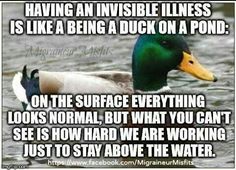
duck

Having any disability is difficult but for those who suffer from invisible conditions, it is a constant uphill battle. In addition to fighting their own conditions, they must also face discrimination and feel like they have to prove they are in fact, genuinely disabled.

As the name suggests, invisible disabilities are quite hard to detect, just by looking at someone. You can not tell if someone suffers from migraines, depression or diabetes just by looking at them. While you may have the best intentions, some of the following statements should never be said to someone with a chronic or invisible illness

“But you don’t look sick/But you look so well.”

While you may be trying to make the sufferer feel better, it can often come across as being accusing. Bear in mind that people with invisible illnesses probably hear this on a day-to-day basis. Not all illnesses are obvious and quite often the sufferer just puts on a brave face or you may have caught them on a good day.

“It could be worse, you could have cancer.”

Of course things could be worse, but if the sufferer has a chronic illness that doesn’t have a cure, they will be facing this condition for the rest of their lives and for some, it doesn’t get much worse than that. As for the cancer reference, just don’t..cancer goes one way or another, the person you are talking to may never be cured or won’t die as a result of a condition. Chronic illness means a life time of suffering.

“You should try this, it worked really well for my aunt, uncle, grandfather etc”

Oh this one really grinds my gears…
Again, you may mean well but unless you are a medical professional, or you also suffer from the condition, keep it to yourself. Anybody who suffers from a chronic or invisible condition wants to get better and have probably tried all treatments available to them. The Paleo diet isn’t going to fix faulty genes, or cure depression. And no, vaccines did not give me EDS!!!!

“It must be great not having to work”

My response is usually “😑”

Most people with chronic disabilities would do anything to live a normal life! Everyone wants to be independent and to have a good income to support their families. Being stuck at home all day can also effect a person’s mental state.

“You just need to exercise more”

Of course everyone should be doing some form of regular exercise. Physiotherapy and other exercises are hugely beneficial and important to maintain ones health but, going for a run or taking up a dance class can often make sufferers feel worse, especially if they have something like Autonomic Dysfunction.

“You are too young to be sick”

NEWSFLASH…
You don’t have to be elderly to be sick! You can become ill or stressed no matter what your age. Illness or disability isn’t age-dependent. Saying this to someone with an invisible condition can often make them feel self conscious about their inability to do normal, everyday tasks such as getting out of the house to get the groceries.

“It is all in your head”

Of all the things people with invisible conditions hear, this is undoubtedly the most dangerous. Sadly, not only is it heard from friends and family, sufferers can often hear it from their doctor. It is not uncommon for people suffering from physical disabilities to suffer from mental illness, and all because they were not believed.

But what can be the worst thing of all for someone with an invisible disability is for them to hear nothing at all. Someone who comes across as being totally disinterested, ignores the subject or just nods can be the most hurtful of all.

Things you should say to someone with an invisible or chronic condition.

“I believe you”

This can often be the nicest possible thing someone with an invisible condition will hear. Too often, sufferers will spend years battling with health care professionals to find an answer. When they finally hear “I believe you,” a huge weight will lift from their shoulders.

“I looked up your condition online”

Someone who takes the time to learn about a condition is very much appreciated amongst those with disabilities.

“How can I help?”

Taking a person shopping, for a cup of coffee or bringing them to their appointments can make all the difference. Sometimes someone with a chronic condition doesn’t leave the house for a long time, or misses a lot of school or work.

Adding to the difficultly of their illness is the feeling of being forgotten or left behind. Even if you can’t take time out of your day, a text or a phone call letting them know you are thinking of them may be a small act for you, but a big gesture for the recipient.

“I’m here”

Two very powerful words but, don’t say it unless you mean it.

I hope people who hear these things on a daily basis won’t feel so alone. Sadly, we will face ignorance in our lives. We will come across some moron who harasses you because you have a disability badge on your car. It’s inevitable. Chin up. We may be ‘invisible’ but we still have our voices to educate and create awareness.

care.jpg

To all the people out there who are skeptical of one’s illness, remember this; never judge a book by its cover. As cheesy as it sounds, it’s true.

So until next time,

Take care of you

Z.M

x

Breastfeeding for the Chronically Ill-What you need to know

Breastfeeding has become such a touchy subject for the last few years and when ever it is discussed it inevitably becomes the breast vs bottle debate. Isn’t anybody else tired of this?! I blame the media (yes, I’m a journalist) because they have instigated ‘mommy wars’ in an attempt to generate more likes and followers on social media. I’m not here to debate ‘whether public breastfeeding is acceptable’ or ‘how long is too long?’ If you must know, I believe in breastfeeding to natural term which by the way, is anything up to 7 years of age. Will I feed a 7 year old myself? Probably not. Will I judge a mother who does? No. Her child, her business.

Anyway, this week I am offering some words of advice to chronically ill moms who wish to breastfeed or are thinking about breastfeeding. This is just touching on some points, if you want me to go into detail about anything, feel free to email me hello@thezebramom.com

1. Health benefits for mom

You’re chronically ill. God forbid you end up with any other ailments other than the crappy lifelong illness you are living with. Breastfeeding reduces a mother’s risk of developing certain cancers, diabetes as well bone conditions such as osteoporosis.

2. Health benefits for baby

“Exclusive breastfeeding for six months has many benefits for the infant and mother. Chief among these is protection against gastrointestinal infections which is observed not only in developing but also industrialized countries. Early initiation of breastfeeding, within one hour of birth, protects the newborn from acquiring infections and reduces newborn mortality. The risk of mortality due to diarrhoea and other infections can increase in infants who are either partially breastfed or not breastfed at all” (WHO)

If your condition is genetic, like mine, you may wonder whether it is worth breastfeeding at all. Absolutely, it is. Again, breastfeeding reduces your child’s chances of developing a massive range of illness and chronic conditions such as diabetes. Breastmilk is the perfect food for your baby. Anything else compromises their gut flora and may lead to problems such as coeliac disease and other food allergies.

3. Breastfeeding is the easier, less exhausting option

The first six weeks are tough and you feel like you are just feeding all day long. This is totally normal and necessary. For the first six weeks your baby is trying to establish your milk supply. Best thing to do is just sit back, relax and enjoy the time with baby. Think about how exhausting it would be if you had to prepare formula, sterilise, wash bottles etc. And the night feeds, Jeez! Having to get up in the middle of the night to make a bottle and wait for it to cool down, that is exhausting. I formula fed Bendy Boy and honestly, I was like a zombie.

After the six week mark your supply will settle and you will have a couple of hours between feeds to go about your day. Cosleeping is also really great for sick breastfeeding moms who need the extra sleep (if you are on medications that make you sleepy you will not be able to cosleep) Baby is close by that you can just pop boob in his/her mouth and you can drift back to sleep. Studies show breastfeeding and cosleeping moms get more sleep.


Breastfeedingfor the chronically ill-2

4. It’s free and always ready to go.

If your condition has caused you to give up work, you might not have the funds to buy formula every week. You’re talking on average a tub of formula is €12. That’s €624 a year! Never mind the cost of bottles, sterilisers and electricity costs.

5. You can breastfeed on medications

I am a massive fan or Dr Jack Newman. He has been a Godsend for me when it comes to getting information on medications. Many misinformed health care professionals will tell you that you can’t breastfeed while on medications. This is not true at all. I am taking Tramadol and and Midodrene for pain and low BP. If you’re not sure about your own medications, check out the Lactmed app for android and iPhone, contact the Breastfeeding and Medications Facebook page or check out Wendy Jones’ factsheets on her website.

Paediatrician Dr Jack Newman, IBLC says:

“There is almost no drug that requires a mother to interrupt breastfeeding. The real question is which is safer for the baby: Breastfeeding with tiny amounts of drug in the milk (and it is almost always tiny) or formula? Clearly, in the majority of cases it is safer for the baby to breastfeed.”

Breastfeeding doesn’t have to be all or nothing. Every drop counts. If you can’t breastfeed yourself, the World Health Organisation recommends:

Milk from a wet-nurse, or
Milk from a milk bank, or
Breastmilk substitute (formula) fed by cup.

I expressed for my daughter for the first six weeks as she was severely tongue tied. I also used donor milk on a couple of occasions.

6. If you’re having trouble, go to a lactation expert

You go to see a cardiology consultant for your heart, a rheumatology consultant for your bones and joints so why would you not see a lactation consultant for breastfeeding? Breastfeeding is a learned skill and all mothers need help in the early days. Sadly, there is a huge lack of knowledge amongst health professionals when it comes to breastfeeding. Most health care professionals have little to no formal training in lactation (even a lot of midwives provide inaccurate information) so you will need to get in touch with an IBCLC or Le Leche League. Breastfeeding should not hurt and despite what some doctors (and the Fed is Best Foundation) might say just 1-2% of women will not produce enough milk. There are even some who say that some babies “just don’t the like milk” or that their baby is allergic to breastmilk (this is extremely rare and it’s far more likely your baby has a cow protein intolerance). Even if your supply is low, there are many things an IBCLC will help you to do to get your supply up such as a supplementary feeding system. If you are find breastfeeding difficult, do contact an expert as soon as possible to avoid further problems. There are so many myths out there so it’s important to talk to someone with extensive training.

If you have any questions, please feel free to comment below. I will do my best to help.

Until the next time,

Z.M

Tongue tie DOES affect breastfeeding


I never thought I’d be brave enough to share this photo but after much encouragement from friends to share my story, I apprehensively upload it. If it helps one woman get through a rough patch, then it is worth any possible embarrassment. This was me when my little girl, Ollie was three weeks old. I was exhausted, actually I was beyond exhausted. I was a zombie trying to disguise myself as a functioning member of society. I was pumping every two hours to get what little breast milk I had to feed my precious little girl. She had an anterior tongue tie that meant she could not physically latch.

After she was born, I knew something wasn’t right. Her latch felt shallow. “I’m pretty sure she has a tongue tie,” I said to the midwife. The midwife glanced inside my baby’s mouth. “No, no, she doesn’t.” As if I was some silly little girl that didn’t know what she was talking about. This isn’t my first experience of tongue tie, lady.

The next three days in hospital were the worst of my life. I began expressing colostrum. One of the younger midwives was very kind and helped me. While I hand expressed milk, she knelt beside me with a syringe and sucked it all up. My baby was having on average 1ml an hour. That didn’t worry me though as I knew baby’s tummy could only hold only a few millilitres at a time anyway. There was a suggestion of giving her formula. At that time I said “If her blood sugars are low, we will talk about it.” Her blood sugars were fine so I continued pumping every hour on the hour. I was exhausted but I was determined to get through this.


Formula was mentioned another couple of times so I was eager to get the f**k out of that hospital. If I wanted to breastfeed no way was I going to be successful stuck in there, with half arsed support. I knew my daughter had a tongue tie and the midwives were clueless, shoving my daughter’s face into my breast in frustration.

I rang a private lactation consultant who I had a good relationship with through my work as a health reporter. She confirmed that baby had a significant tongue tie and that it would need to be clipped.

We travelled an hour away and paid €200 to have my daughter’s tongue tie clipped. It was the most expensive two seconds of my life. The GP who performed the procedure said that it was one of the worst anterior tongue ties she had ever seen and that my daughter’s tongue was pretty much non functioning.


Those words..non functioning. Meaning my daughter would have had a plethora of problems later on, including her speech. Now, imagine if I wasn’t as well informed and educated and I had been and I had taken the midwife’s word that my daughter’s latch was fine. Imagine I wasn’t determined to breastfeed. I would have given up within the first 2 days. The only reason I was so well informed this time is because I found out my son had a posterior tongue tie when he was 3. I only managed to breastfeed him for 2 weeks. Feeding with his tongue tie caused my nipples to blister, bleed and crack. I cried at the very thought of feeding him.


After the tongue tie was clipped, my baby’s latch was getting better and better. As Dr Jack Newman says “babies learn to breastfeed by breastfeeding.” It was just a matter of time and practice for the two of us. I was continuing to pump still as it takes up to 2 weeks for baby to learn how to latch again.

By 6 weeks she was exclusively on the boob and we were both so happy. I was so happy to sleep again! Instead of waking up every two hours to pump a couple of ounces, I kept baby close in bed with me. When she woke, it was just a case of popping boob out, latching her on and drifting back to sleep.


There is no doubt that tongue tie affects infant feeding. It can affect bottle fed babies too! There is a question over whether lip tie affects feeding but anecdotal and some scientific evidence suggests it might. It needs to be explored further.

Both my children have lip tie. Ollie’s lip tie is pretty significant but it doesn’t affect our feeding, thankfully. You’ll notice the people with significant lip tie immediately, they have a gap between their two front teeth.

The thing is, I’m not angry at the staff in the maternity hospital for letting me down. I’m angry at the whole system. Our health care professionals including midwives, public health nurses, dentists, consultants and GPs all need training on this subject. Too many women are being fobbed off and it is affecting the health of our children. It’s also costing the government €12 million a year! That’s how much we would save if all Irish women breastfed. But, at present we are doomed to fail. Things won’t change until support is increased and training is up to date amongst health care workers.

If my story rings any bells please do not beat yourself up for not being able to breastfeed. Don’t feel guilty, feel angry! You were let down! Once you come to this realisation you can use your own experiences to help other mothers. Breastfeeding is a learned and skill and yes its bloody hard in those first few weeks but it isn’t meant to hurt! No matter what your aunt, grandmother or friend says. If breastfeeding hurt, we would have never survived as a species. Think about it for a second.

If you are having trouble breastfeeding please contact Le Leche League or a lactation consultant.

Without my lactation consultant, I would have never made it to this milestone of six months. The help is out there, go seek it.

X

Six reasons why you should use cloth nappies


Older generations of Irish people will remember the use of cloth nappies. Traditionally, cloth diapers consisted of a folded square or rectangle of fabric such as linen and fastened with safety pins.
Anecdotes from years ago tell us that using cloth to dress baby’s bum was a painstaking process of boiling, washing and drying. When disposable nappies were introduced in the 1950s, mothers everywhere rejoiced. However, cloth nappies are making a comeback and for very good reasons. Yvonne Evans explains why.

Tradition…with a twist
1) Using cloth nappies does not mean going back to safety pins and folding, like the parents of pre-1950. Cloth nappies are more convenient than ever featuring velcro and poppers for easy fitting. They are soft, made from organic materials and come in a massive range of sizes and colours.

Saving the earth..
2) Disposable nappies contribute to four per cent of our landfill usage and take approximately 500 years to decompose. Even eco-friendly nappies, which, can be purchased in health food stores, take a long time to decompose.
It is estimated that 600,000 nappies are used in Ireland everyday, and 94 per cent of which end up in our landfills. One baby will create 2.5 tonnes of waste; go through approximately 4,000-8,000 nappies over two years. County Councils all over Ireland are calling parents to start using cloth nappies over disposables.
Disposable nappies contain a plethora of chemicals such as plastics and perfumes, which have a major negative impact on the environment. Despite instructions on the packaging, most people incorrectly throw disposable nappies, with the poo still inside, straight into the bin.

While decomposing, the human waste lets off methane, one of the most damaging of the greenhouse gases, and may even pollute the groundwater. To keep your baby in disposable nappies until they are potty trained, 4.5 trees will be sacrificed.

Unpleasant odors..
3) Let’s face it, nappies stink! Despite what you might think, modern cloth nappies actually smell far less than disposables. On average, you will use five nappies a day, that’s 35 per week. With bin collections generally only taking place once a week, that means you may have a very stinky kitchen or bathroom for a few days! Gross..

Let it snow! Wait…what?!
4) Ten years ago and more, the absorbency in disposables came from wood pulp. This is no longer the case, except for the cheapest of own-brands. The nappies have indeed decreased in size, but that is because super-absorbency granules have replaced the wood pulp in them. Essentially, the same product as you can buy in your garden centre to add to the soil to improve water retention. It’s also the same stuff Hollywood uses to make fake snow! Disposable nappies are largely believed to contain chemicals and materials that may irritate your baby’s skin. Nappy rash is a common complaint amongst parents who purchase disposable nappies, something cloth parents don’t usually complain of.

Cloth nappies keep newborns hips slightly wider apart than disposables do, but this is actually the optimum position for a newborn. When a baby is born, their hip joints haven’t fully developed, and at their six-eight week check, the doctor will check for ‘clicky hips’ or hip dysplasia. If baby has clicky hips, they often need to wear a hip harness. This harness keeps their legs wider apart so that the hip ball and socket joint are held in a deeper position and can develop properly. This usually helps prevent the need for hip operations later on.  Cloth nappies don’t have the hips in as wide a position as a hip harness, but the extra width and support cloth nappies provide can sometimes prevent the need for a hip harness at all.

Potty time!
Another health benefit to using cloth nappies is that children who wear them generally tend to potty train faster. Cloth wearing children are more aware of being wet and recognise the sensation of urinating much earlier on.

It’s all about the money
6) Keeping your child in disposable nappies for three years may cost you between a thousand and two thousand Euros, depending on the brand and how frequently your child needs changing. Disposables can never be reused so you will spend at least €1,000 on your second and subsequent children.
The beauty of cloth is that you can buy and sell ‘pre loved’ nappies. Even with laundry costs, cloth nappying is still the cheaper option in the long run. Cloth nappies come in a variety of sizes, colours and print. The most economical type of cloth nappies is the birth to potty types. These nappies can be used when your child is a newborn right up until potty training age. Approximately 20 cloth nappies is all you need for your little one’s first two years of life.

You just need to look at cloth nappies to see just how much more attractive they are! Whether you are into cupcakes and rainbows or Game of Thrones, there is a nappy to suit everyone’s taste. Cloth nappying often becomes a hobby for many parents, collecting rare and limited edition prints.

Personally, I use birth to potty Flip nappies and Tiny Nipper wraps. They are so versatile! You can use virtually anything as an insert, a towel, a muslin, anything! They are great for babies with little legs like my Ollie.

For more information see clothnappylibrary.ie or the Facebook page ‘Cloth Nappy Library Ireland.’