All posts by thezebramom

Mother of two amazing kids. A sufferer of Ehlers Danlos Syndrome, Autonomic Mediated syncope, Postural Orthostatic Tachycardia Syndrome and a whole host of other conditions. Loves to write about parenting and chronic illness.

A letter to my fellow chronic illness sufferers.

Hey there, hi there, ho there!

Recently I’ve read posts from fellow chronic illness sufferers about having to endure ignorant comments from strangers and sadly, friends and family about how how hard it must be for those in their life caring for them without their own difficulties being acknowledged. Now, I’m not saying that life for carers isn’t hard. They have it so tough but, what outside observers tend to forget is that there is a vulnerable person, in pain, unable to look after themselves who have feelings of loss, despair, grief and insecurity. Many sufferers are still dealing with the fact that they are not 100% independent. That can be a very difficult pill to swallow.

For those of you who have had to endure such ignorant comments, this letter is for you.

Do you ever have days where you think: “God, I’m such a burden.” or “I need something but I don’t want to ask for help again.”?

I do. All. The. Time.

How many of us have been with friends or family and listen to them go on and on about how wonderful your husband/wife/partner etc is for taking care of you? Most of them will be somewhat diplomatic but, there are times when you are unfortunate enough to endure a conversation with an ignorant friend or stranger.

You know your spouse/partner is wonderful that’s exactly why you are with them in the first place. You don’t need someone to tell you how hard it is for them to put up with your moods that are a result of fatigue, pain and pure unadulterated frustration. You don’t need  them to remind you that you depend on them to help you with tasks that any healthy person could do for themselves.

When someone says: “Isn’t he/she great for looking after you?”

This is what we hear:

“You’re a burden on your husband. You know that, right? If you didn’t have him you would struggle and probably be alone.”

OK, OK. It might sound a bit dramatic but if it’s what you hear almost every time your illness is discussed it grates on you. Words are funny things. When people are already insecure in themselves they can read into things that may not have any ill intent. Chronic illness eats away at our bodies but it also eats away at our minds and self confidence.

You hear how great your partner is more than you hear how great you are for not getting into bed and never coming out of it no matter how much you want to do that sometimes. But that’s the nature of having a chronic illness, isn’t it? People simply don’t get it. Unless you have a life threatening illness, nobody really listens. Chronic illnesses aren’t “sexy” diseases that can be marketed as well as life threatening ones. People don’t get that your symptoms are for as long as you live-there is no cure and there is no looming death sentence.

Yes, it is really hard for caregivers. Especially for parents and partners of people with chronic illnesses. Caregiving can often be a full time job without the pay. But, imagine how hard it is for the person who is being cared for. Having to be cared for can be downright humiliating. You need help getting off the toilet when your hips are giving you trouble, you need to be lifted out of the bath because you’re dizzy. You need help dressing because your so fatigued after having a shower. You need someone to cook and clean for you because you simply can’t. It takes years for people to come to terms with this-if ever.

You shouldn’t have to be considered “really special” to take care of your significant other, isn’t that the whole point of committing to each other? In sickness and in health etc, etc? Isn’t it part and parcel of choosing to have a child or deciding to spend your life with someone?

I have so many friends who are chronically ill who have their husbands/wives/mothers etc acting as their carers. I know they have had to endure ignorant comments from strangers about whether or not they should have children, that they are a burden on their partner and that their partner is “a really, really great guy that puts up with a lot”. But, I know those same people fight every single day to face their illness and a world that is filled with so much ignorance head on. I also know that these people are so appreciative of everything the people in their support system do to make their lives that bit more bearable. I see them declaring their love and appreciation of their caregiver to the world. But I also know that these same people lay next to their partners on the couch or in bed after a really hard day. They look them in the eye and thank them for everything they have done today to help them endure the pain, the fatigue and all the horrible symptoms they put up with every single day.

Of course you should thank them. They didn’t ask for this life either and yet, they do it anyway and without complaining (well, most of the time anyway). Doing something special for your caregiver every now and then is a nice way to show your appreciation. If your significant other is your carer, sometimes the romance can dwindle and the relationship can go from lover to carer. So it is important to do something together that keeps that passion between you going. Even if it’s snuggling up on the couch and having a kissing and cuddling session. It goes both ways, though. Sometimes those needing to be cared for can feel inferior, childlike, useless,unattractive and yes, a burden. We will explore maintaining romantic relationships next week.

So you, reading this. If you’re chronically ill and have a loved one caring for you remember this; you’re not a burden. You didn’t choose to be sick. You take on the biggest task of all. Surviving.

e339d4833d8d9e58394076402074a7e4

Life has given you a pretty crappy hand but you’re still here and that should be applauded. You put up with more things in one week than most people deal with in a lifetime. You are good enough. You are not “lucky” to have a parent/partner caring for you. Sure, there are people who wouldn’t be up to the task of looking after a chronically sick loved one but that doesn’t make you any more “lucky”. Luck has nothing to do with it. You fell in love with a good person and they fell in love with you for the same reason. You are not your illness. It does not define who you are-unless you want it to. Being chronically ill does bring out the not so pleasant side of people but it also embellishes all the wonderful traits of you too. You learn to be more compassionate, more appreciative of the little things in life like a walk on the beach or an hour in the playground with your child. You learn to take opportunities-when you can. You learn that saying no is perfectly fine. If you’re not up to it, you don’t do it. Chronic illness takes so much away but it allows us to see the world in a unique way.

Bottom line is your caregiver is a wonderful person but, so are you.

Till next time,

Z.M

x

Being Chronically Ill means..

Hey there, hi there, ho there!

Hope everyone had a nice break over the holiday period and that you’ve recovered from all the travelling, cooking, early mornings and late nights.

In latest news I’m very excited to announce I have been asked to speak at a medical conference in Manchester this coming May. The conference is to educate and raise awareness of Vascular Ehlers Danlos Syndrome. I am truly honoured to have been asked to address medical professionals from all over the world. It’s a massive responsibility to represent the EDS community and I will do my best to explain the struggles we all face.

Anyway,  I just wrote this piece for a bit of a laugh. I’m not trying to be a negative ninny (in case somebody doesn’t pick up on my sarcastic tone), I will get around to writing part two of my trip to London shortly. I know some of you were eager to read about prices and places to stay etc.

Hope you enjoy my latest blog!

One day of fun=several days of a flare up.

You’ve taken your meds, you’re feeling as well as can be. You put on your glad rags and you make it into the car. Even doing that much your energy levels start to drop and your pain levels start to rise but God damn it, your going to this party. You’ve been staring at the same four walls for weeks now. Even if you have to walk in with a cane or arrive in your wheelchair, you are going to spread your wings and be a social butterfly for one evening.

giphy

You manage to spend an hour or so catching up with friends while listening to how “you look great and you’d never know you were sick by looking at you” when all you wanted to do was forget you were sick for one night. But getting out is worth being someone’s inspiration porn.

You go home and fall into bed. This is where you stay for the next few days only crawling out to use the toilet or to grab a packet of crackers to stop yourself from starving to death.

You have more sets of PJs than actual clothes.

You spend more time at home than you do outside so it’s only natural you’d spend a lot of time in what you’re most comfortable in. While many of us would prefer to get dressed and glammed up to make ourselves feel normal, others just don’t want to waste energy on putting on clothes and make up. A lot of the time you choose between getting dressed or putting on a load of laundry or ya know, eating?

Hey! If these dudes can walk around in their house all day in their PJs, why can’t I?

giphy1

Your bed is your best friend and your enemy.

When you’re ill a lot of the time your bedroom becomes your place to escape so that you can rest and recover. Unfortunately you do end up spending a lot of time in bed and sometimes it can be for several days. You can often end up resenting your bed. While the majority of society love their beds, people who are chronically ill associate it with being in pain.

You often develop a less than desirable odour.

When you’ve been in bed for a day or so, you develop a very specific smell. It’s a mix of sweat, anguish and food that you’ve spilled on yourself. Getting up for a shower can be very tough on our bodies. Again, it’s about picking and choosing what you spend your energy on. Bathing or making dinner. The kids have to eat. The smell won’t kill em but starvation probably will.

When you do get round to washing  yourself you feel somewhat human again. But then you have to go lie down.

If someone were to shake you, you’d probably rattle.

You can never just have one chronic illness. No, no, no. There’s always a domino affect. Your main illness causes all sorts of weird and wonderful sub conditions. Consequently you take a whole lotta pills to keep yourself functioning. You’ve got one cupboard in your house that looks like a pharmacy, you have to brace yourself when you open it as more often than not, something falls out. People are always shocked to see it and know that if they get a headache while in your home you’ll have an array of pills to kick that sucker’s ass.

giphy2

A successful day for you is getting dressed and actually leaving the house.

Just grabbing whatever has been tossed at the end of your bed and leaving the house to buy food or collect the kids is enough to gush about when your significant comes home from work. Victory is yours!

You get annoyed listening to people crib about having a cold, going to work or having to go to out socialising with their friends even though they are so00 tired.

Many of us can’t work or leave the house when we want so don’t complain and tell us “I know how you feel” because you have a cold. Difference is you’re going to get better. Oh no! You have to go to a Christmas party? My heart bleeds for you.

giphy

You have watched anything worth watching already.

Netflix and chill doesn’t mean the same thing to us. It literally means to binge watch shows while doped up to our eye balls on pain meds. Many of us will tell you we have spent many a day watching OITNB while curled into the foetal position because said meds aren’t working.

Till next time,

Z.M

x

A Simple Guide to The Ehlers Danlos Syndromes

UPDATE: On March 15 2017, criteria and classifications of The Ehlers Danlos Syndromes were updated for the first time in 20 years. In light of this, I will update my guide (with the new information made available) to highlight new diagnostic criteria and classifications. You can read more about the changes here.

Because there are now 13 types of EDS, I have only covered Hypermobile Ehlers Danlos Syndrome (hEDS), Vascular Ehlers Danlos Syndrome (vEDS) and Classical Ehlers Danlos Syndrome (cEDS). If you would like me to do another guide to the rarer types, please comment below or email me. I would be more than happy to oblige!

“You’re suffering from Fibromyalgia!” “You’re depressed!” “You’re imagining it!”

“You’re malingering!” “You’re attention seeking!-”

“No I’m not – I have an Ehlers Danlos Syndrome!”

 The Ehlers Danlos Syndromes (EDS) are a group of conditions that are poorly understood, even by many in the medical professions. It is essentially a defect in the production of collagen, an essential component of connective tissue.

Many articles about EDS contain medical terminology that can be difficult to understand. The purpose of this guide is to put the medical terminology in plain language and help non-affected family and friends understand exactly how EDS affects people and their day-to-day lives. The medical terminology is included in italics. Links to web pages are included throughout the article if you want to conduct your own research.

Why are they called The Ehlers Danlos Syndromes (EDS)?

The name of the condition itself is quite a mouthful! Ehlers Danlos Syndrome (Eylerz-Dan loss Sin-drome) is named after the two physicians, Dr Ehlers and Dr Danlos, who first described this group of connective tissue disorders.

What is EDS?

People with a type of EDS will produce faulty collagen. Collagen is essential for healthy connective tissue, which is found throughout the body supporting and connecting the different types of tissues and organs, including tendons, ligaments, blood vessels, internal organs, bones, the blood and skin.

Imagine a healthy person’s connective tissue as being like regular household glue. People with EDS have collagen that is more like chewing gum; stretchy and not very good at keeping things in place.

What causes EDS?

There are a number of different genes responsible for making collagen and connective tissue, so there are different types of EDS depending on which genes are faulty. There are 13 types of The Ehlers Danlos Syndromes

How did I get a faulty gene?

It is possible that the faulty gene may have been inherited from one parent, or both parents, or not inherited at all. It may be that the defect has occurred in that person for the first time. This happens in 25% of cases.

 How I explained it to my 7-year old son.

A carpenter makes a wooden chair. Instead of using wood glue to place the joints of the chair together, he uses chewing gum. Once finished, the chair looks fine. But, as time goes by and the chair is used, the chewing gum doesn’t work very well at keeping the joints together. Without proper glue the chair can begin to get wobbly. I went on to explain that with proper exercise he could help to strengthen his muscles so that they acted like binding around the joints to help support them.

What does EDS feel like?

Having an EDS feels different from person to person, depending on their type, but many describe it as having a lifelong flu. Have you ever had the flu? Do you remember how painful it was having those aches and pains in the joints and muscles? Do you remember how tired and run down you felt? That’s what it’s like for people with EDS only worse and it never goes away. In addition to the daily aches and pains people with EDS also have to deal with very painful headaches, gut issues and then of course there’s the issue of dislocation. Many EDSers can’t go a day without a joint popping out. It can happen simply by stepping off a footpath or picking up a pot when cooking. A lot of people with EDS are also affected by the weather. When it is damp or when the air pressure changes their pain can increase.

How does EDS affect people?

Because collagen is everywhere in the body, there are hundreds of ways EDS can affect people. Any two people with EDS may have very different signs and symptoms, this includes people with the same type. In som,e the condition is quite mild. For others it can be disabling. Some of the rare severe types can be life-threatening.

One of the problems with diagnosing EDS is that many diseases share the same symptoms. As a result, EDS can be easily confused with other conditions and it may be difficult for doctors to recognise. But there are ways to tell if someone may be affected by EDS and need more thorough investigation. Some of the investigations available are listed later.

The most common symptoms of EDS (hEDS and cEDS) are:

  • “Double jointed” – Hypermobility: joints that are more flexible than normal.
  • Loose, unstable joints that dislocate easily.
  • Clicking joints.
  • Joint and muscle pain

In addition there may be

  • Fatigue (extreme tiredness).
  • Injuring easily.
  • Fragile skin that bruises and tears easily. The skin may also be stretchy.
  • Digestive problems
  • Dizziness and an increased heart rate after standing up. (Postural Orthostatic Tachycardia Syndrome or simply POTS for short)
  • Incontinence of urine in women

Digestion.

If food in the stomach doesn’t move through the body to make its way out it may just sits in the intestines and can cause a feeling of fullness, nausea, vomiting, stomach pain, to name just a few symptoms. This condition is known as Gastroparesis. (gas-tro par-eesis).

Nervous System

Another condition than often affects people with EDS is a fault with that part of the nervous system controlling the “automatic” functions of the body; things like blood pressure, breathing, heartbeat, digestion, how hot or cold you feel and the way your organs work and so on. This is called the Autonomic Nervous System. When it doesn’t operate as it should the conditions is called Dysautonomia (Dis-auto-no-me-a). Common symptoms of this are trouble with digestion, dizziness and fainting.

Dysautonomia affecting the heart.

The most common type of Dysautonomia causes dizziness and an increased heart rate after standing up. This condition is called Postural Orthostatic Tachycardia Syndrome or simply, POTS for short.

Some sufferers have fairly mild symptoms and can continue with normal work, school, social and recreational activities. For others, symptoms may be so severe that normal life things like bathing, housework, eating, sitting upright, walking or standing can be very difficult. They may feel dizzy or even faint from doing these things.

What are the symptoms for POTS?

People with POTS experience fatigue (extreme tiredness), headaches, lightheadedness (feeling dizzy), heart palpitations (when their heart beats so hard you can hear and feel it), exercise intolerance (feel ill when exercising), nausea (feeling sick), diminished concentration (hard to concentrate), tremulousness (shaking), syncope (fainting), coldness or pain in the arms, legs, fingers and toes, chest pain and shortness of breath. People with POTS can develop a reddish purple colour in the legs when standing; this is believed to be caused by blood falling down in the body because of weak veins. The colour change subsides upon returning to sitting or lying position.

Can you tell someone has EDS just by looking at them?

The short answer is no. Some may have typically blue sclera (whites of the eyes), they may have translucent skin (see through) and you may even notice how bendy they are. But some people may have some of these things and not have EDS.

Many people with the type of EDS that affects blood vessels (Vascular Ehlers Danlos Syndrome or simply, vEDS) do have some facial characteristics. Notice in the picture below that the people have big eyes, thin nose and lips.

veds_type_poster3_2

Can EDS kill people?

Some people think it can’t but actually, EDS has led to the untimely death of people all over the world. vEDS is considered the most serious form of EDS due to the possibility of the heart or organs tearing.

Many EDSers live a life of constant pain. This pain and misunderstanding from their medical teams, families and friends can make a person feel very sad and alone which can lead to depression and even suicide.

What treatments are available for people with EDS?

Because EDS is considered “rare” there are not many doctors willing to learn about it. Types such as hEDS and cEDS can be somewhat managed through specialised physiotherapy. Joints with weak connective tissue are more likely to dislocate. Exercises to strengthen the muscles around a joint can help stabilize the joint. Your physical therapist might also recommend specific braces to help prevent joint dislocations. Occupational therapy is also useful to help manage everyday life. Pain relief is very important for people with EDS.

EDSers should also be under the care of a Rheumatologist (a doctor who looks after bones and joints), a Cardiologist (heart doctor). There may also be a need for more specialised doctors such as Neurologists (doctors who look after the nervous system) or all of the above plus many, many more. Sometimes operations are required to repair joints that have dislocated frequently and haven’t healed properly.

Do all people with EDS need wheelchairs?

Not everyone will experience EDS the same way, some people can live normal lives and manage very well with physiotherapy and pain relief. Others may need to use wheelchairs or walking sticks to help them get around. Some people with EDS also have Gastroparesis which we discussed earlier and may need to be fed using a tube. Others may only have mild tummy problems. Some people with EDS may have to go to hospital a lot while some may only go to their GP every few months. But, just because one person can live their lives fairly normally, it doesn’t mean they don’t have EDS or that their pain shouldn’t be taken seriously.

Can you catch EDS, POTS or Gastroparesis?

No. EDS and other sub conditions are not contagious. If you know somebody with EDS, don’t be afraid, you’re not going to catch anything from them. So, if you’re avoiding someone with EDS, go make friends with them.

 How can I help someone with EDS?

Be there to listen if they want to talk about it. Some people are afraid to tell you how they feel because they think friends and family don’t want to hear them complain. Ask them how they are and if you can do anything to help them. Doing shopping or household chores can be a huge help and it would be most appreciated. If you’re friend or family member has EDS and can’t access appropriate treatment like here in Ireland, write to your local representatives to tell them about EDS and the lack of care that is available. Help raise awareness in the public by sharing articles or pictures about EDS. Experts believe that EDS is not rare, just rarely diagnosed.

I will update the Diagnostic Criteria for cEDS, hEDS and vEDS in the coming days.

*Special thanks to my Dad who helped me edit this guide.*

Do you think anything else about EDS needs to be explained? Let me know in the comments!

Z.M

x


Teaching our children about consent should start in early childhood

The topic of consent is everywhere at the moment, it is an important social issue that affects each and every person, male or female, no matter their age. While I welcome mandatory consent classes on college campuses, I can’t help but wonder whether we are leaving it too late to begin introducing the topic of consent to the young people of Ireland? Let’s face it; the majority of first year college students are already sexually active. Should these mandatory classes be apart of the secondary curriculum? Absolutely. But as parents I feel it is our responsibility to plant the seed much earlier on in life.

I recently watched Louise O’Neill’s documentary Asking for It? If you haven’t seen it yet, you can watch it here. After it’s airing, I began scrolling through comment sections on social media to suss out what the Irish public thought of rape culture and the issue of consent.

Sadly, I was unsurprised to see so many people claim that Ireland does not have a rape culture. People were either too fixated on the word “culture” or almost literally sticking their fingers in their ears and screaming to avoid dealing with this very real issue. It’s such an Irish thing to do, to sweep it under the carpet, no need to make anyone uncomfortable. We have a rich history of turning our backs on painful subjects. Just look at the Magdalene Laundry scandal, for instance. Modern day Ireland is repulsed with how women up until very recently were treated by the Church. We are also disgusted that as a society we kept quiet. This attitude reflects what we are seeing today with women being perceived within a Madonna-whore complex. No, “rape culture” does not mean that as a nation we condone rape. Not. At. All. Of course the vast majority of people believe that rape is a heinous crime and those who carry out such acts should be punished to the fullest extent. Consent is consent and using excuses means we will never tackle the real issue head on.

We have a tendency to victim blame, not just about rape but also in many other situations. Just look at Kim Kardashian’s ordeal in Paris, for example. The narrative wasn’t about this traumatic event a human being went through but rather, blaming Kim for showing off her very expensive jewellery on social media. That she was “asking for it to happen.” The same thing happens to victims of sexual assault.

“Well if she’s going out dressed like that…”

“She shouldn’t have walked home alone”.

“How much did she have to drink?”

“Sure wasn’t she mauling the face off him earlier on in the night? What did she expect?”

Excusing a man’s (or woman’s) actions because they were drunk and saying “he/she would never do that normally.”

Every time these words are uttered we undermine the actual issue.

Growing up in Ireland, I could not go with friends for a night out without the following lecture chanted at me like some sort of protection spell:

“Stay with the crowd, don’t wonder off alone. Watch your drink. If someone is buying you a drink, go to the bar with them.”

As a young teenage girl, I had never been exposed to rape. It was something I only knew about from obsessively watching Law and Order: SVU. It was something that happened in far away lands, not here in little ole Ireland. Then again, I did live a fairly sheltered life.

But, as I began going out more, I started to understand why my mother gave me the same speech over and over again, each and every single night out. Even today at 29, a mother of two children, I am still reminded by my mother to do all of those things. Years ago I would have rolled my eyes at mum followed by a “yeah, yeah, yeah. OK, Mum.” Now?  I make sure I don’t walk home alone on the rare night I do go out. Or if I can’t get someone to walk home with me, I call my husband for the 7-minute walk home. A lot can happen in 7 minutes.

I recently had a discussion with an older relative about rape culture and particularly, victim blaming. The conversation went something like this:

“Women have a level of responsibility to protect themselves,” the relative said.

In a perfect world, it would be great for women to feel comfortable enough to walk home alone at night. It has been drilled into our heads so much that we shouldn’t put ourselves in dangerous situations but how about we start telling young men before they go out to respect any girl they potentially hook up with. That no means no and not try a little harder to swoon her into submission.

Sexual abuse is rarely ever about sex, it’s about power. Assault can happen anytime, anywhere and the attacker more often than not is someone familiar to the victim. 93% of perpetrators are familiar to their victims.

I responded to this relative with a question.

“If a man is mugged in the street at night. Do you blame the man or the thugs that mugged him?”

This made my relative stop and think.

A few days later we went to the woods for a stroll and some foraging. We separated for a few minutes. I noticed a white van with no windows pull up near me. I looked around to see how many people were around me and checked the laces on my runners were tied properly. My male relative didn’t acknowledge the van, as in he didn’t think twice about it. Women all over the world are on edge. We always have our defenses up. Will that guy cat calling follow me home? Will I arrive home safely in this taxi?

When scrolling through the comments section under Jennifer Hough’s article about rape culture in Cork one comment stuck out for me.

It went something like this:

There have been no reports of rape over the weekend so I question the author’s claim that she saw this happening.

One in four Irish women have experienced sexual abuse at some point in their lives. One. In. Four. That’s almost as common as cancer and yet, why don’t we see it in the media more? Victims of assault fear the trauma of reliving their experience during an investigation or fear of being accused of leading the perpetrator on; that they did something to ask for the attack. According to the Rape Crisis Centre Network of Ireland’s (RCC) 2014 statistics 33% of survivors contacted the police about their assault. According to the Sexual Abuse and Violence in Ireland Report (SAVI), only one in ten sexual crimes are reported in Ireland. Of that one in ten, only 7% secures a conviction. Less than 1% of victims of sexual crime in Ireland get justice.

So, just because we don’t see it in the media everyday, it doesn’t it’s not happening.

Consent is a hot topic and Louise O’Neill’s documentary resulted in the subject being discussed everywhere-amongst friends, on social media and in the news. The end message is we need to teach young men about consent just as we teach women to protect themselves. We are now seeing mandatory classes in collages being taught about consent but should we wait until most young people are already sexually active before we introduce the idea of consent to them?

Just the other day my 7-year-old son was trying to get his 19-month-old sister to give him hugs and kisses. She was shouting no but my son kept trying. At that age of course there was no malice in his actions but something clicked. This is where it begins. I told my son there and then that if his sister didn’t want hugs and kisses and she is shouting no that it meant no and to stop. I want him to understand that now, not when he’s a teenage boy. No means no. We see it all the time, relatives practically forcing children to show them affection. Why are we so pushy for physical affection? Children are not property. We have no right to hit them so why should we force them to hug and kiss us? It is their body. It is their choice. Their feelings about their personal space matter as much as any adult’s.

It all starts in childhood. We need to teach our children that our bodies are our own and nobody, not our parents or siblings have a right to invade our personal space or have forced affection brought on them. Parents often tell their children to let them know if anyone touches them inappropriately. Abuse often starts with uninvited touching, hugging or stroking. If we force affection on a child who clearly doesn’t want it, it can be confusing for them to know when something is inappropriate. Forced affection doesn’t show children we love them, it shows them that we can do as we please with their bodies.

If you don’t believe the idea of consent should be introduced to children just take a look at the figures from the 2014 RCC report:

52% of survivors aged 13 to 17 were subjected to rape

15% of perpetrators were under 18

9% of survivors attending crisis centres in Ireland were children.

Waiting until our children become young adults to discuss consent is too late and the figures reflect this.

Although parents or relatives have no intention of harming a child, nor do they think they are doing anything inappropriate; we are teaching our children that an adult or other person’s want for physical affection is more important than their own comfort and safety. It starts as early as toddlerhood; we are laying the groundwork for behaviours that continue into adult life. Teaching our children that no means no could potentially save them from assault later in life. It could also empower young people to have sex only when they’re ready to.

We don’t see physical interaction amongst children as a problem until it’s too late. They tickle, they force hugs and rarely they mean any harm. But every parent has experienced an occasion where their child has either been subjected to touching they didn’t want or have been the ones to force the affection or tickles. So how can we introduce consent to children without going into too much detail about sexual abuse?

We need to teach our children to ask for permission to touch another person. “Is it okay if I hug you? Or “Can I have a hug?”

This teaches our children to ask for permission and it also teaches them to think about their actions before they do them.

We need to teach our children that consent can be taken away too.

Adults know all too well, especially parents that we have days where we feel “touched out.” Kids have those days too. They may have been very affectionate and willing to accept affection the day before but they are well in their rights to tell someone that they don’t want to be touched today. This maybe confusing for other children so it is vital that we show them that it’s OK to change your mind.

A child should never be forced to show affection to another person.

It is a common occurrence that children are told, “go give Nana a hug” or “give Aunty a kiss”. Children are eager to please so they may oblige but that shouldn’t be the case. No matter how familiar your child is with someone, he/she should feel comfortable enough to say no. Given that 93% of cases involve a person the victim is familiar with, it is important that we validate our children’s feelings and respect their decision. Under no circumstances should you guilt a child into giving you affection. Don’t pretend to cry or be sad. So many of us are guilty of this. I know my husband and I have been guilty of this. Humans need touch, we are social creatures but it isn’t really affection if you force or guilt a child into it is it?

Not saying no doesn’t mean yes.

As discussed, children are eager to please so they may do something they don’t really want to do to please a friend, teacher or family member. You may think your own child has no problem saying no but they may not be so forthcoming with someone other than you. Our children must also learn just because they don’t hear a resounding no that it means they can go ahead with that hug or kiss.

Practice what you preach.

Lead by example. Children imitate what they see in their day-to-day lives. If they see Daddy (or Mommy) force affection on to one another, the idea that it’s OK to do that is solidified. Many couples will force a hug or a kiss a form of tomfoolery and no there is no ill intent but still, it is important for us to show our children that we should respect everyone’s boundaries.

Further reading and helplines:

Click to access RCNI-National-Stats-2014.pdf

Rape Crisis Centre helpline:

1800 778888

or see the website www.rapecrisishelp.ie.

Until next time,

Z.M.


11 Crazy Things People With EDS Have Heard

I spoke with some fellow EDS zebras about some of the down right crazy things they have heard from health care professionals, friends and family about their condition. Comment below if you have anything you’d like to add to the list.

giphy10

1. You have EDS because you’re vaccine injured.

No. Just no. A vaccine isn’t going to alter my genes. Shoo! EDS is genetic. GEN-ETIC.

giphy3

2. You have EDS because you’re possessed.

Seriously. This came from a chap who works in my local takeaway. Offered to make me herbal blends to cleanse my soul. Thanks, but no thanks, mate. Stick to making pizza, k?

giphy4

3. You obviously have Lyme disease. That triggered your EDS.

giphy2

Yes, there are some overlaps with EDS and Lyme but the latter isn’t going to cause your collagen to magically turn into a chewing gum like consistency.

4. You have EDS because you’re stressed.

I was told the stress of my wedding caused my EDS. If that’s true then EDS must be far more common! We should all stay single. Job done.

giphy5

5. You’re husband is a lucky guy.

*insert pervy wink here* Shockingly, this came from a Doctor!

giphy6

This is the extend of my bedroom antics, Doc. Seriously, I’m more likely to pop out a hip than to climax.

6.You’re sick because you’re in a bad relationship

This was in the Doctor’s office and my husband was sitting right next to me. The only bad relationship here is with this Doctor.

giphy11

I mean, talk about awkward. If a Doctor was genuinely concerned about the patient, wouldn’t they wait until their patient was alone? Nobody is going to admit they are in a bad relationship in front of the person they are in a relationship with. Anyway, the point is martial issues are never going to cause a person to dislocate a joint.

7. You’re too young to be sick

Yes, because that’s how chronic illness works. You wonder if these health care professionals obtained their degrees from the bottom of a cereal box. Do you even science, bruh?

giphy7

I’m too young? Hold on a sec while I tell my body that I’m not actually 90 years old.

8. You’re too short to have EDS

I think you’re confusing my condition with Marfan Syndrome.

giphy-2

9. A holy man once surrounded my hospital bed with his followers they started to chant and pray.

Well, that’s just creepy.

giphy8

Here, while your at it, could you pray for me to win the lottery so I can pay for my very expensive medical treatment? Oh it doesn’t work like that? Silly me.

10. Your son has EDS because you’re a bad parent.

Like, what the actual F?

The child’s mysterious problems are from his mother yelling at him and letting him get away with too much all at the same time. This was said by a paediatric consultant!

giphy9

11. Someone assumed because I was in a wheelchair that I was mentally affected.

I was seen in the wheelchair while being pushed by my husband and this old man saw me in the chair and automatically thought I had an intellectual disability. We had our dog with us and looked at me and said (in baby talk voice, no less) “is that your cat? Hah?! Is that your cat? What a lovely cat hah? HAH??!”

 I just looked at him smiled and said nicely “yeah funny looking cat, no?! The poor man looked shocked. He just said, “have a nice day” and skootled off quickly.

What do you do in a situation like that? Laugh? Cry? Both?

giphy12

Has any thing like this happened to you? Let me know in the comments!

Share this with your friends and family to help educate them.

Until next time,

ZM

X

You know you’re breastfeeding a toddler when..

It’s National Breastfeeding Week! I love this time of year because my Facebook timeline is filled with beautiful pictures of children having milky cuddles with their mummies. Of course this week also means there will be heated debates under articles, such as this one. This week is not about debate though, it’s about celebrating and promoting breastfeeding. And boy, do we need to promote the sugar out of breastfeeding. In Ireland just 1-2% of one year olds are breastfed. The low breastfeeding rates is costing our Government approximately 800 million Euro each year. The HSE and World Health Organisation recommends all infants are exclusively breastfed and then fed along with solids until at least two years old.

Breastfeeding a toddler is so much fun! Nursing can be challenging at times but things change once your little baby becomes a toddler, breastmilk is no longer just about nutrition but immunity, comfort and so, so much more. Scientific studies show that the natural weaning age is anywhere from 4-7 years of age. The average weaning age world wide is 4 years old.

You know you’re breastfeeding a toddler when..

1. Your child finds new and interesting positions to nurse in. 

Before now, you had your go to position, whether it was laid back or a rugby hold, you had that position down. Long gone are the days when you felt so awkward, perfecting the latch and then meeting your baby’s eyes with a loving gaze.

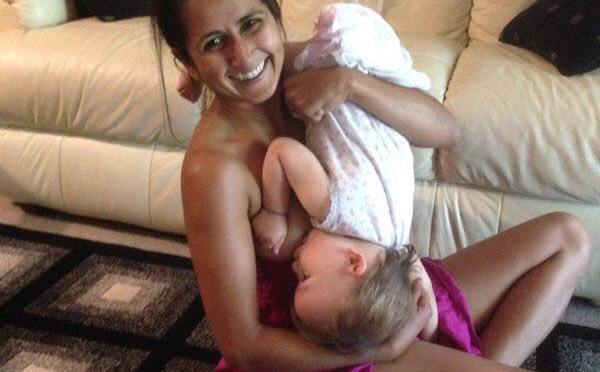
Now? Feet in your face, feet in your mouth, feet in their mouth. Nursing has become a yoga extravaganza. You wonder to yourself “HOW THE HELL CAN YOU BEND LIKE THAT?!” In breastfeeding circles we call this act ‘Gymnurstics’. If only it was an Olympic sport.

gymnurstics

2. Your child thanks you.

Especially when you don’t ever expect them to. The fact that they know it’s something they love and appreciate, innately astounds you.

3. You feel less like a mum and more like a buffet table.

With child hopping from “dis side” to “dis side” every ten seconds, you start to wonder if your boobs provide different flavours! Chocolate and vanilla perhaps?

giphy4

4.You’re nursing two toddlers and

They argue about who is getting which boob and agree on a compromise.

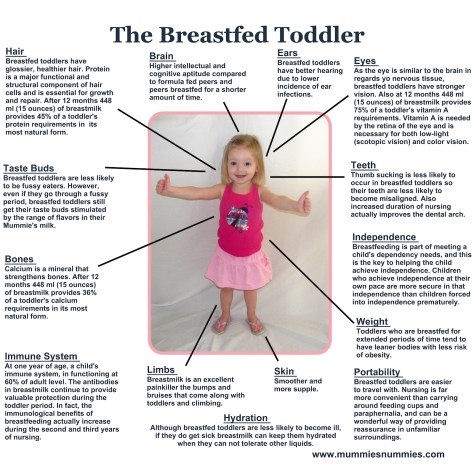
5. You post this infographic every time someone says there are no benefits to breastmilk after 12 months:

foto friday-012

or this one

infographic-bfing-toddler

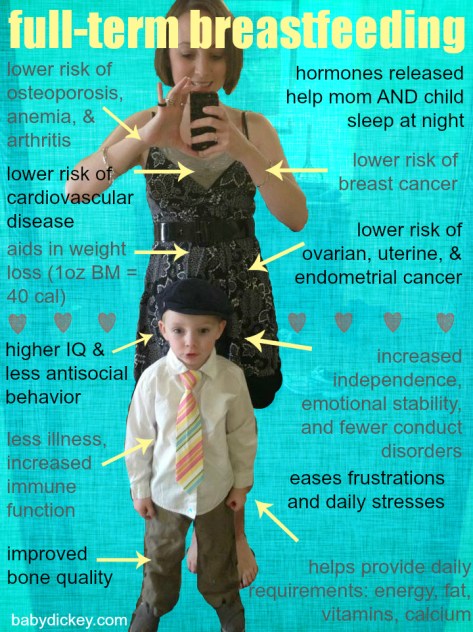
It’s actually crazy how many health care professionals tell mothers that nursing passed 12 months is only for them and there are no benefits to the child. As you can tell from the graphics above, there is an abundance of benefits in full term nursing. There is also amazing benefits for mom too. Check it them out below:

f9491061aad63941ae2a5a0a0a2cf122

6. Your toddler has their own word for your milk.

My little girl asks for “boob” at 17 months but I have heard the cutest ways toddlers ask for milk like “bainne”, “mama milk” and”milkies”, to name just a few.

7. Nipple twiddling becomes a game.

No matter how many people think it’s “weird”, “gross” or “wrong”, there is a biological purpose for nipple twiddling. Children twiddle nipples or slap mother’s breasts to stimulate the let down of the milk. However, many toddlers turn this into a game by seeing just how far mommy’s nipples can stretch out. It’s hilarious until you realise you haven’t trimmed their nails in awhile or you get sprayed in the face with your own milk. Hey, at least you’ll have some awesome skin!

giphy

8. You’re so amused when people find out you’re still nursing and they recoil in horror.

It’s very amusing to hear people criticise “extended” breastfeeding, especially when their own toddlers are sitting across the way from you with a dummy or bottle in their mouths. We are the only mammals that don’t let their young self wean and we are the only mammals that drink the milk of other species. It’s ironic really that mothers of breastfeeding toddlers are criticised yet full grown adults drink the growth fluid of calfs. Many people are under the impression that breastfed toddlers and older children are only being fed breastmilk. While yes, it is an amazing source of nutrition, children over a year do need to have a healthy diet of solid food in addition to their mummy’s milk. A lot of people also believe (without any basis for their thoughts) that breastfed toddlers will be “clingy” and will have psychological problems when they’re older. This is not the case at all. Studies show that breastfed children are protected against mental health problems and addictions.They tend to be higher in intelligence and more emotionally secure than children who were not breastfed.

Following on from that

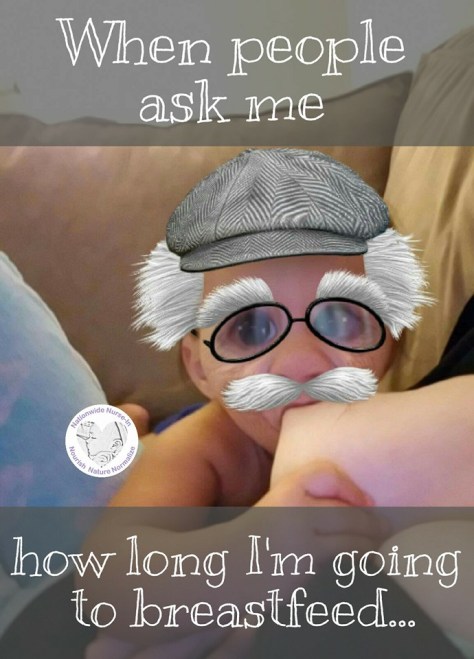
9. When you’re asked how long you’re going to continue to nurse for.

When somebody is being rude asking me that question, I’ll usually answer with something sarcastic like “We will probably wrap it up when she starts college.” For anyone who is genuinely asking I tell them that we will stop when we are both ready. It’s a two way relationship. Feeding a toddler makes life so much easier. I’m not sure how we would deal with tantrums and illness without breastfeeding. It really is the answer to so many problems.

14391009_1769778793294070_8021807045819374532_n

10. When they learn how to unclip your bra and help themselves.

This aspect of feeding a toddler is simply brilliant, especially at night. If you’re cosleeping and breastfeeding your child will eventually learn how to get your top open/up and latch on while you’re still sleeping. Studies show that mothers who breastfeed and co sleep get more sleep than mothers who don’t. Who doesn’t love extra sleep?

11. Your toddler feeds their dolls/teddies/toy trains and even cats.

There is nothing sweeter than seeing your toddler pretending to be mommy and lifting their top to nourish their baby dolls. It’s amazing to see natural instincts kick in when their babies are “crying”. My own daughter recently chased the cat around the house with her top up screaming “nummy nummy num”.

If your toddler isn’t feeding their toy, they’re getting you to feed them. Lying down with your toddler latched on one boob and some inanimate object resting on the other.

12. Your toddler learns that other people have nipples too.

Recently my daughter realised Daddy had nipples too. She stared at them for a few minutes. Daddy and I waited to see what would happen. Of course I was trying to convince her that Daddy has milk too while he was trying to tell her he didn’t. After a couple of minutes, she opened her mouth (very reluctantly) and went for a taste. She was immediately put off my the hair that surrounds Daddy’s nipples.

bpg02k

and finally

13. Your toddler and your husband have a lot in common.

The sight of bare boobies makes your toddler giggle, squeal and clap. Motor boating is also a favourite past time.

A final word..

Feeding a toddler brings so much joy but quite often comments made on social media or from friends and family can be really off putting. Women are called pedophiles and weirdos just for simply following their biological instincts and doing what is best for them and their child. It’s a sad reality that breasts are used to sell everything from cars to food but should a woman use them for their biological purpose, they are abused. Breastfeeding is in no way sexual and anyone who thinks so should take a class in Biology. Would you scoff at a dog feeding her 8 week old puppies? In human years, that would equal to a toddler. Even cows, when left alone will feed from their mothers for up to four years. We don’t respect our mammalian instincts anymore.

We rarely see full term breastfeeding in our everyday lives. Where we see it most is in films or TV shows and the characters are usually portrayed as really radical hippies or weirdos. Take Game of Thrones, for example.  The feeding of a 10 year old is pretty unrealistic. Children loose the ability to correctly latch at around aged 7. Ever wondered why they are called milk teeth? When a child looses their milk teeth, this is right about the age where they would naturally wean. Hence the natural weaning age is between 4 and 7. Portraying full term breastfeeding in a negative way does nothing but hinder the acceptance or normalisation of the act.

It is really only in the West that we have such a problem with breastfeeding.

“In Mongolia, there’s an oft-quoted saying that the best wrestlers are breastfed for at least six years – a serious endorsement in a country where wrestling is the national sport.”Read more about this here.

There is no reason you need to stop feeding your baby once they hit 12 months, unless you want to. If it feels right for you and your baby, go for it and feck the begrudgers.

giphy1

Our medical trip to London. Part 1

So, I’m sitting on a plane at Heathrow airport. As I stare out the window and listen to the rumblings of the engines preparing to take us back home, I reflect on the last few days.

I have been running on adrenaline, will power and strong cups of coffee to let my family enjoy the experience of everything London has to offer. I know they wouldn’t have gone sight seeing if they knew just how unwell I was. I can’t hide it now though. My pelvis has separated, which it does every few days or with exertion. My wrist popped out and is now painfully bruised. I am emotionally and physically drained.

We arrived in London on Tuesday evening. Weary after our drive from Cork to Dublin, I was looking forward to getting to our hotel in the Premier Inn Earl’s Court and hopping into the bath for a soak. Ollie Pops N’Clicks had other plans..

In addition to inheriting all my wonderful genetic gifts, she also inherited my inability to travel without some form of sickness cropping up. Yup. Right there on the packed tube, close to me in the sling she vomited. And I mean vomited. Like ‘Team America’ vomited. It just kept coming! How could someone so little bring up that much puke?

giphy-3

The smell. Christ. Just what I needed. I look over at my husband only to see him laughing. Then everybody else in the tube noticed what happened and began to laugh too. Frickin’ hilarious, lads.

giphy1

We hopped off the tube so I could clean myself up as much as possible. We eventually made it to the hotel in one piece, just. Ravenous, we dropped off our bags, got washed up and went to the restaurant for a pleasant dinner.

I didn’t sleep so well that night. The next afternoon Bendy Boy and I would be meeting the Professor Grahame. I met him once at a conference in Cork. He was just as sweet and gentle as I had remembered. The Professor knows all too well the struggle Irish zebras face, almost total abandonment from our own Government and healthcare system. No specialists and the majority of tests needed are simply unavailable. We don’t even have an upright MRI machine.

giphy2


After an examination and a very long chat, the Professor confirmed Bendy Boy’s diagnosis of EDS Hypermobility Type. It was also noted that the six year old shows signs of Postural Orthostatic Tachycardia Syndrome. When Bendy Boy stands up, his heart rate rises and his feet pool with blood. I was shocked to learn of the POTS signs as he has never complained of feeling dizzy except when he gets out of the bath. I was surprised I didn’t notice the pooling.

The Professor seemed impressed with my knowledge and understanding of medical terminology. When there are no experts available to you, you have to become your own expert.

Here is an excerpt from my own medical report:

“On examination there is evidence of widespread joint laxity with a hypermobility score of 8/9 on the hypermobility scale. Outside the scale her shoulders and hips (borderline) are also hypermobile, as are her feet which flatten and pronate on weight bearing. There is a non-significant 2° scoliosis on the Bunnell scoliometer, but no other features of a marfanoid habitus. Her skin is soft and silky and semitransparent, and shows increased stretchiness in the phase of taking up slack. There are numerous thin scars from knee scrapes acquired in childhood and similar over her elbows. Striae atrophicae were first noted by her at the age of 18, and she has minimal striae gravidarum despite having had two full-term pregnancies, a pointer to EDS. Gorlin sign, ability to touch the nose with the tip of the tongue is positive, and the lingual frenulum is rudimentary, both pointers to EDS. She scored very highly (25/30) on our checklist of symptoms compatible with autonomic dysfunction, known to be a common feature of EDS. Her blood pressure lying was 124/84, pulse rate 66; standing 124/84, pulse rate 80. This rise of 14bpm on change of posture is suggestive of postural tachycardia syndrome (PoTS), the most frequently encountered form of dysautonomia seen in patients with EDS. The evident pooling of blood in her toes on standing is further evidence in favour of PoTS.

On the basis of the clinical findings I have formed the conclusion that Yvonne is suffering from a heritable disorder of connective tissue, the Ehlers-Danlos syndrome hypermobility type, a diagnosis that was established by Dr Mulcahy in 2013. I explained the nature of the condition to her, in particular its genetic basis and the vulnerability it confers on soft tissues to the effects of injury and overuse. In her case it has resulted in longstanding widespread joint and spinal pain. Since the time of her first pregnancy she has suffered a secondary chronic pain syndrome, a frequent occurrence in this situation. It is likely that her bowel symptoms represent an EDS-related intestinal dysmotility, and almost certainly she has PoTS.

There is a concern about the possibility that she might have craniocervical instability on the basis of left-sided weakness, headaches, and paraesthesia in her arms and legs. In addition she feels that her head feels too heavy for her neck. With this array of suggestive symptoms I have agreed that we should proceed to an upright MRI examination, and I will be requesting this at the Medserena Upright MRI Unit for her to have one on a future visit.”

And Bendy Boy’s report:

On examination there is evidence of widespread joint laxity with a hypermobility score of 8/9 on the hypermobility scale. Outside the scale his shoulders, cervical spine, hips, fingers and big toes are all hypermobile, as are his feet which flatten and pronate on weight bearing. There is a non-significant 3° scoliosis on the Bunnell scoliometer. Other features of a marfanoid habitus include a pectus excavatum, and hand-height and foot-height ratios both elevated to within the marfanoid range. I interpret these findings as indicating an incomplete marfanoid habitus, which may become more obvious as he completes his adolescent growth spurt. This should not be taken to imply that I feel he has the Marfan syndrome as the habitus is widely distributed throughout the family of heritable disorders of connective tissue. His skin is characteristically soft, silky and semitransparent, and shows increased stretchiness in the phase of taking up slack. There are no paper-thin scars of note. Gorlin sign, ability to touch the nose with the tip of the tongue, is negative. The lingual frenulum is present (normal). He scored moderately highly (12/30) on our checklist of symptoms compatible with autonomic dysfunction, known to be a common feature of EDS. His blood pressure lying was 96/53, pulse rate 75; standing 102/62, pulse rate 85. This rise of 10bpm on change of posture is suggestive of postural tachycardia syndrome (PoTS), the most frequently encountered form of dysautonomia seen in patients with EDS.

On the basis of the clinical findings I confirm that Alexander shares his mother’s phenotype and diagnosis.”

While I was being examined, Ollie Pop (16 months) decided to stand up on her own for the first time!  And I missed it. Thank You, EDS!

Receiving the confirmation of EDS HT and the noted symptoms of POTS given by Professor Grahame will hopefully bear weight in accessing services here in Ireland. Although, I won’t hold my breath. My GP was happy to hear that I took the plunge going to the UK and she’s very interested in my case. It took a long time to find a GP that genuinely cares. While a weight has been lifted knowing that I definitely have EDS and haven’t been misdiagnosed for the hundredth time, there is a fear. The idea of having cervical instability or Chiari freaks the sugar out of me. This last trip cost roughly 5,000 Euro. The next trip will be double that again. If Chiari is present and significant it may mean I will have to take a trip to the US to have surgery. We will just have to wait and see.

Coming home to Ireland, it is wet and windy. It’s miserable. The weather here reflects how I feel about Ireland and it’s healthcare system.

giphy3

Now that I’m home I don’t have access to the fantastic services and more importantly the compassion I felt in London. I felt so at ease.

I am fundraising to get back to the UK in the new year for further testing. I will give details of these in Part 2 along with the rest of my tale. If you can donate anything at all, just click on the link below. Even sharing our story would be a massive help.

https://www.gofundme.com/2befu24c

So, until next time,

ZM.

x


Recipe of the Month (July)-Home Made Big Mac

Our local McDonald’s was only 20 minutes away when I was growing up but I always loved when my mum would make a home made Big Mac at home. The sauce she used was a Marie Rose sauce but I loved the freshness and the effort my mum went to. Since the internet became awash with gross pictures and horror stories about McDonald’s, I have been totally turned off. It’s easily been two years since I sat and ate in a McDonald’s restaurant. Oh, but how I miss that burger sauce. I found a video online about how to make your own Big Mac. It’s the closest recipe I have ever found and it’s delicious!

Ingredients

For the patties:

Minced beef -2 patties per person

Onion salt

For the sauce:

1?2 cup of mayonaise

1 teaspoon of ketchup

2  tablespoons of mustard

1 tablespoon of finely chopped onion

4 teaspoons of Tomato relish

1 teaspoon of sugar

1 teaspoon of salt

What else you’ll need:

Gherkins

Lettuce

Sliced cheddar

Sesame seed burger buns

Baking paper

How to make the Big Mac

Step 1: The patties.

Put the mince beef into a mixing bowl and add a tablespoon of onion salt.

With your hands, work the onion salt into the meat. Then take just less than a handful of mince and roll into a ball. Place it on a chopping board covered with baking paper and flatten the ball into a pattie. Keep in mind that the patties will shrink so make them slightly bigger than the bun. For a true Maccy D’s pattie, flatten the living heck outta it.

Step 2: The “not so” secret sauce.

While the pan is heating up, mix all the ingredients for your sauce. Make sure to mix it well. The only lumps should be from the onion. The colour should be a pale orange.

Step 3: Constructing the burger.

While the burgers are cooking, it’s time to get your garnishes and buns ready. Lightly toast  two bottom buns and a top bun. Once the buns are toasted, put sauce, lettuce and cheese on the bottom bun. On the middle bun place sauce, lettuce and gherkins.

Once the burgers are cooked, place the first patty on the bottom bun and then place the middle bun on top of that. Then, place the second burger on top of the middle bun. Put the top bun on and voila!

burger

Serve with over salted skinny fries for a real McDonald’s experience.

The only difference between this burger and the real Big Mac is how filling it is. I was stuffed! Normally I leave McDonald’s thinking of what to eat next as I’m normally hungry 20 minutes later. Maybe it’s the MSG? I dunno. I plan to play around with the sauce recipe to see if I can make a more nutritious version. If I’m successful, I’ll update this blog so check back in soon to see if I had any joy with that.

giphy-8

Until next time,

Z.M

x


Household Gadgets for Spoonies-Part 1

What’s a “spoonie”? A spoonie is a person who suffers from a Chronic Illness. It is derived from Spoon Theory. When you are ill every. single. day, you need to decide what’s important. Do I shower or clean the bathroom? Although it might be a no brainer that you obviously choose the shower, for many of us, we have to forgo the shower otherwise the house will look something like this:

hoarder-barbie-dreamhouse-4

Laundry-

When it comes to actually doing the laundry, it can actually be quite tough on the body with all the bending down to grab clothes out of the machine and reaching up to hang them on the washing line. To stop me bending down so much I bought a laundry basket with folding legs. I also bought a device that helps me fold clothes beautifully. I suffer from DCD like symptoms as does my son due to our EDS.

Top tip: Mountains of clothes stacked on chairs around the house? Everytime you do a load of laundry check the sizes, condition and try to remember the last time you wore it. Is it too big or too small? Put it in a bag to pass along to a friend or charity shop. Does it have holes in it? In all honesty, are you going to repair it? Bin it. Have you worn it in the last 6-12 months? If the answer is no, put it in the pass along pile. This will save you doing “the big clear out”.

Cleaning-

This is something everybody hates doing so can you imagine what it’s like for someone who may end up in bed for a week by doing simple cleaning tasks?

Hoovering and mopping the floors is a massive task for spoonies and can often lead to injury. Lugging around hoovers and buckets of water for the mop can often mean I dislocate or pull something. Hence why I don’t do the floors often! We did invest in a steam mop that can also be used to clean surfaces. I do the find the X5 to be a bit heavy so if anyone knows of a lighter model, let me know in the comments! What I particularly like about the steam mop is that you can clean without the use of chemicals.

https://www.youtube.com/watch?v=Mn0-bchY5aA

I haven’t bought one yet but I’m dying to get a cordless hoover from Dyson or a one of those rob hoover/mops. Other spoonies have recommended them to me. Come on, how awesome is this?!


5171AzV3P8L._SY355_

Top tip: Fill one of these guys with 1 part dish soap and 1 part white vinegar. Keep it in the shower and wash down surfaces before you get out of the shower or while you are conditioning your hair. Simples!

If your shower or bath has mould growing around the rubber edges you can soak some cotton pads in bleach and place it on the mouldy areas. Leave them there for a few hours and then wipe clean. The rubber areas will be white again!

Tidying up-

If you have kids and are chronically ill, keeping the house tidy can be a full time job. We live in a two storey house which makes things that bit more difficult. Recently, I bought two little blue baskets. When I am tidying up I go to each room and put things in the basket that don’t belong in that room. Then, as I go from room to room I put the things where they belong. If you have visitors coming around and you need to tidy quickly-just fill up the baskets and leave them to sort later.

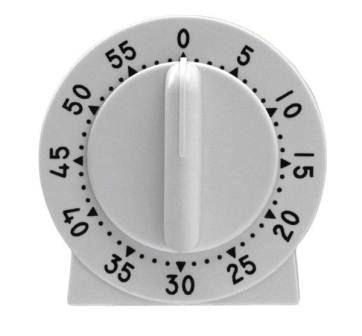
Top tip: This one is particularly handy for the little ones. Buy a timer. Each day set it for 5 or 10 minutes-whatever you can manage and for those few minutes do a little cleaning or tidying. It’s amazing what you can get done in such a small amount of time!

timer.jpg

Some other gadgets for cleaning and tidying:


Messy in the kitchen? Invest in some stove top protectors 

Dog hair everywhere? Dyson have an attachment you can use to hoover your pet

Slipper mops allow you to clean the floors while you walk to the fridge-or to bed.

A keyboard with storage is handy for extra wires, notes and pens.

I hope some of these tips have been helpful to you. Have any tips/gadgets you want to share? Hit me up in the comments and I’ll add them to Part 2.

Till next time,

Z.M

x


Famous, fabulous and flexible


Exploring the world of hypermobile celebs.

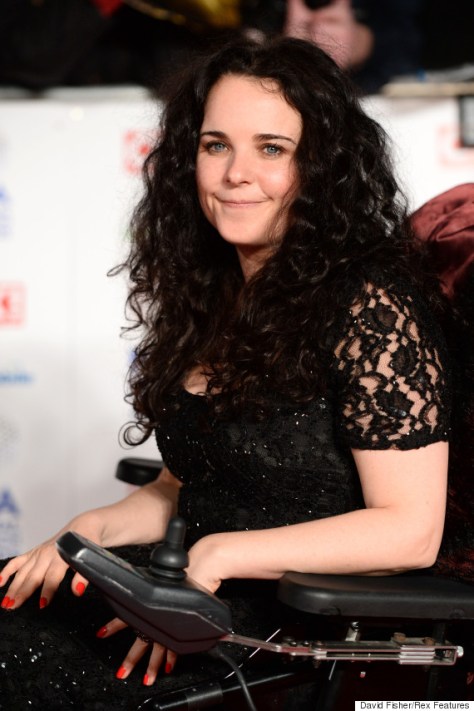
Cherylee Houston

Corrie’s Cheryl Houston is probably one of the most famous people who suffers from Hypermobility Ehlers Danlos Syndrome. Cherylee has done fantastic work raising awareness about the condition through EDS UK. She is Coronation Street’s first full time disabled actress.

National Television Awards, The O2, London, Britain - 22 Jan 2014
Mandatory Credit: Photo by David Fisher/REX Shutterstock (3525294ld) Cherylee Houston National Television Awards, The O2, London, Britain – 22 Jan 2014


Gary Turner

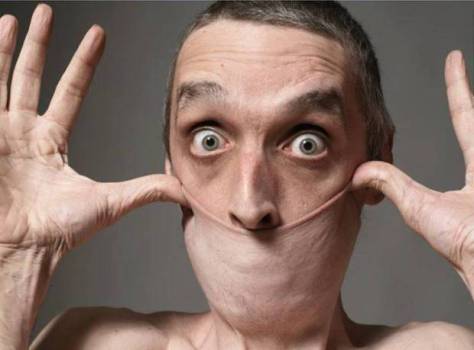
Gary ‘Stretch’ Turner can stretch the skin of his stomach to a distended length of 15.8cm or 6.25in due to Ehlers-Danlos Syndrome.

He is even in the new book of Guinness World Records!

ad_171430170-2
guinness world records best bodies Garry Turner skin guinnessworldrecords.com https://www.facebook.com/GuinnessWorldRecords/timeline

Mylene Klass

UK Singer Myleene often shows off her hyper mobile elbows. She can even play the piano backwards!

article-0-19F8CFE2000005DC-683_634x337

Kelly Osbourne

Various articles state that Kelly suffers from hypermobile hips that frequently pop in and out. Reports even suggest that the fashionista’s hips pop out unexpectedly causing her to fall over. During her stint in Dancing with the Stars she said: ”I’m double-jointed everywhere, I think that’s why I’m so accident prone. Tight jeans and high heels equals one of my hips popping out and my face on the floor. As a result of this curse, I can fall perfectly. I turn it into a dance move.” (Xposé.ie)

Ouch! By the sounds of it, Kelly suffers from a hypermobility syndrome.

osbourne1f713

Shakira

The pint sized Columbian singer isn’t shy about showing off her tricks. She can pull her legs over her head which “really freaks people out”.

Shakira-bendy-body-vidm-Main

A Few Honourable Mentions

It is believed although not proven that historical figures such as Abraham Lincoln and Anne Frank suffered from connective tissue disorder,Marfan Syndrome.

Abraham Lincoln was 6″4. The president’s lanky build, his long, thin face, and his enormous hands and feet, sparked the notion that Lincoln might have had Marfan Syndrome. Geneticists and historians have debated this idea since it was first proposed in the early 1960s.

Abraham_Lincoln_O-116_by_Gardner,_1865-crop

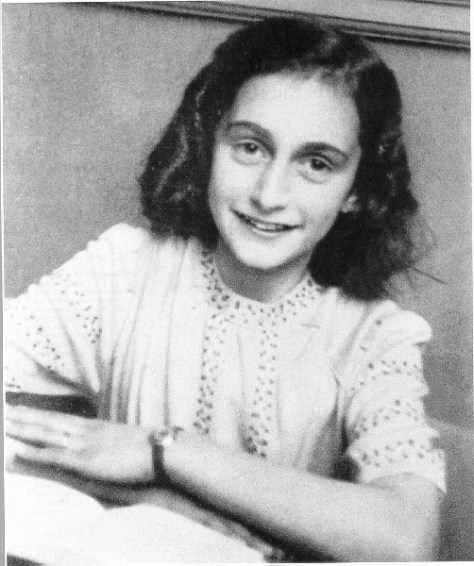
Anne Frank, the famous German diarist who hid in her attic during World War II is believed to have suffered from Ehlers Danlos or some other Connective Tissue Disorder such as Marfan Syndrome. When talking about P.E in her diary, she says:

I’m not allowed to take part because my shoulders and hips tend to get dislocated.

Anne’s facial features also suggested she may have suffered from EDS. Her large eyes, thin nose and lips are common features in EDS sufferers.

Anne-Frank-anne-frank-5856574-502-600

There is a wide belief amongst medical professionals that both Elizabeth Taylor and The King of Pop, Michael Jackson both had EDS.

LIZ-TAYLOR-59-REX_1855246a
Note how bendy the actress’ elbows are.

Dr Diana Driscoll explains in the video below the reasons she believes Liz Taylor had EDS.

Interestingly, Michael and Elizabeth were friends. It is known that Michael suffered from chronic pain and insomnia, both of which are common symptoms of EDS. In addition to his hypermobility, it is possible to assume the late singer battled with the syndrome. Watch below from 16:40. Professor Rodney Grahame, one of world’s leading expert explains why he believes Jackson had Ehlers Danlos Syndrome.

While we have mentioned syndromes such as Marfan and EDS, it is important to note that 10% of the population are hypermobile and will not suffer from pain or complications. Many people with hypermobility live perfectly normal lives, some even use their bendiness to their advantage by taking part in Ballet and Gymnastics.

Have you spotted any bendy celebs? Hit comment and let me know!

Until next time,

Z.M